
An owner is furnishing a kitchenette and finds themselves in front of a shelf of kitchen accessories. A large set looks convincing, but does a guest really need three kinds of glasses and a baking set? When equipping a kitchen for short stays, it’s worth working backwards: first decide what meals guests should be able to prepare comfortably, then buy the items needed for those tasks.
A good starting point is breakfast, a simple hot meal and serving food to everyone the apartment is intended to accommodate. For each of these tasks, there should be a complete set of items, from preparing the ingredients to putting away the washed dishes. This is not about creating a kitchen for a professional chef, but about avoiding small obstacles that get in the way of ordinary cooking.
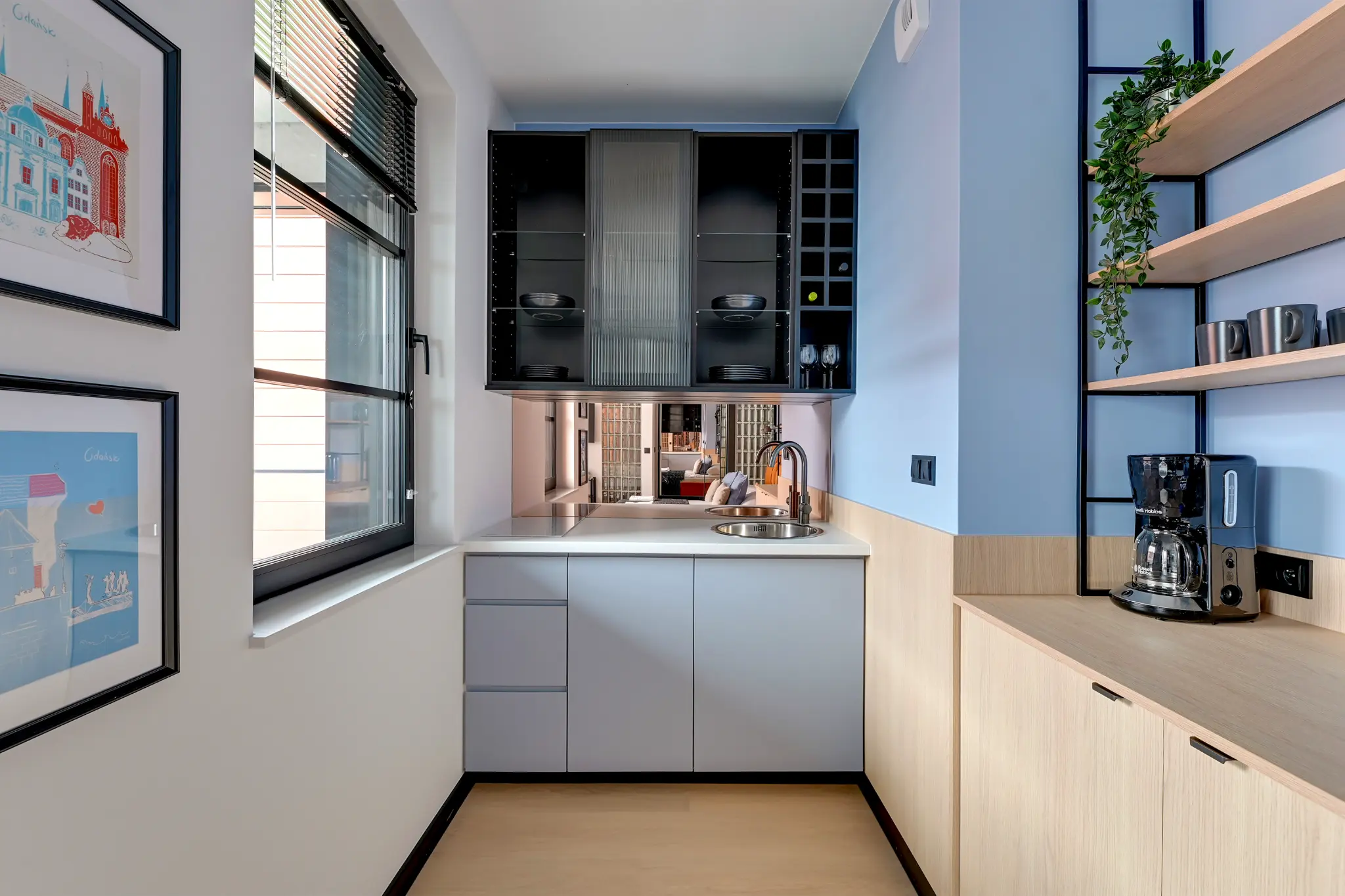
Start with the Meal, Not the Number of Accessories
Imagine a hypothetical stay by a couple who have sandwiches in the morning and make pasta with vegetables in the evening. For breakfast, they’ll need a chopping board, knife, plates and mugs. Dinner will also require a pot, frying pan, colander, and utensils for stirring and serving. Buying pots alone, then, does not complete the job.
Work through scenarios like these on paper. For each one, identify where the guest will chop ingredients, what they will cook them in, and what they will eat from. If any step cannot be completed, fill the gap. If another item would duplicate an existing function, hold off on buying it. This is a more useful criterion than the number of pieces listed on a set’s packaging.
Match the Dishes to the Number of Guests
Match the number of place settings to the number of people who can sleep in the property, including on additional beds. In a hypothetical four-person apartment, two large plates won’t be enough for everyone to eat together, even if the rest of the kitchen is lavishly equipped. Check plates, bowls, mugs, glasses and cutlery separately.
Choose a coordinated set rather than several incomplete ones. The dishes should fit in the cupboards and suit the way washing up is done in the property. A small bowl that works for porridge, soup and salad can replace several specialised dishes. Glasses are a separate decision: choose one versatile type if it suits the character of the apartment, rather than immediately putting together glassware for every drink.
Don’t copy your own home kitchen. The fact that an owner likes espresso and uses small cups doesn’t mean they can replace ordinary mugs. A basic set should let guests choose a simple way to serve their meal.
Choose Pots and Pans That Make Up a Small, Functional Set
To start, consider two pots of different capacities with matching lids, plus one frying pan. This is not a universal rule: the choice depends on the number of guests and the available hob. A smaller pot can be used for sauce, and a larger one for pasta. The important thing is that both can be positioned sensibly, not merely fit in the cupboard.
Before buying, check that the cookware is compatible with the appliance. An induction hob requires a suitable magnetic base 1, and its size should match the cooking zone 2. Follow the cookware markings and the documentation for the specific hob, not just the appearance of the set. Also, don’t assume that any lid will fit the pot you choose.
If the property has an oven, consider one versatile oven dish whose manufacturer approves it for that use. Without an oven, an extensive collection of baking trays and tins is not justified. The equipment should match what the kitchen actually allows guests to do.
Add the Small Items That Complete the Process
Small, unassuming items are the easiest to overlook. A nice frying pan won’t make up for a missing spatula, and pasta in a pot needs to be drained somehow. A short checklist could look like this:
- a chopping board and a knife for chopping ingredients and bread;
- a colander, mixing bowl and peeler;
- a spatula suited to the frying pan’s surface and a serving spoon;
- a can opener, corkscrew and trivet for hot dishes.
Treat this list as a starting point, not a catalogue of mandatory purchases. Choose utensils that are comfortable to hold, easy to put away and fit in a drawer. A decorative block with lots of knives is not necessarily better than a smaller set that covers the tasks you have in mind.
Small Appliances Must Earn Their Place
A kettle and a chosen way to make coffee meet specific needs. For any additional appliance, however, ask two questions: what task does it make easier, and where will it go? A toaster can be a sensible addition if it still leaves room to prepare food. A blender, waffle maker or sandwich toaster should not go in the apartment just because it was part of a special offer.
Don’t try to make up for difficult operation by buying a second appliance with a similar function. If the problem is that the coffee machine or hob is hard to operate, see the guide to appliance instructions for guests. This section is about deciding what should actually be in the kitchen, not how to press the buttons.
Leave Room for Food and Food Preparation
A cupboard packed to the brim may mean there’s no room for groceries brought by a guest. Similarly, a worktop cluttered with appliances makes even a good set difficult to use. Plan for clear space for a chopping board, ingredients and a plate before adding decorations.
Store utensils for the same task together. Lids shouldn’t require searching through several cupboards, and everyday dishes are best kept somewhere easy to reach. These decisions are best taken into account during interior design. You can also find broader context in the article about apartment furnishing mistakes.
Test the Set Before Handing the Property Over for Management
Instead of just counting items, try preparing a simple meal for the intended number of people. Take out the pots, chop the ingredients, set the table and then put everything away. You’ll notice both any missing utensils and any dishes that are difficult to take out without emptying a cupboard. This is a usability check, not proof of future rental results.
Talk to GrandRent about your property if you’d like to discuss preparing the apartment and the scope of rental management in Trójmiasto. It’s worth starting with photos of the kitchen, the number of sleeping places and a list of the appliances you already have. The initial conversation about entrusting rental management is free; any additional services and their scope require separate arrangements.
Technical sources
The article explains the rules and questions you should ask the operator. Rental results and cooperation terms require analysis of the specific apartment.