
The apartment is furnished, an impressive light hangs above the living room, and the owner is wondering whether any additional light sources are needed. The best way to find out is not by browsing a lighting catalogue, but by trying out an ordinary evening: someone reads on the sofa, another person eats at the table, and later they both make their way to the bedroom.
How do you plan different lighting zones in an apartment for rent? First, describe what a guest will do in each area and which lights they should be able to switch on independently. Only then choose solutions with a designer. The owner does not need to draw up an electrical plan. They should, however, be able to say: “I want to read without lighting up the whole bedroom” or “I want to see the table while sitting at it, not just look at the light above it.”
Start with activities, not the number of lights
The Philips guide distinguishes between general lighting, which illuminates a room; task lighting, focused on a particular activity; and accent lighting, which highlights a chosen feature of the interior.1 This is a useful distinction for owners: a beautifully lit wall does not answer the question of whether someone can read comfortably in an armchair.
On a floor plan with the furniture in place, mark where people will read, eat and walk between rooms. Add the desired effect beside each area. Not “three lights in the living room,” but “light by the sofa, a separate light above the table, and the option to illuminate the whole room.” This description gives the designer room to choose solutions instead of imposing a random set of products.
In a hypothetical studio apartment, the sofa might turn into a bed in the evening. In that case, consider both layouts: reading while seated and using the light once the furniture has been unfolded. A zone is defined by how the space is used, not by the name of the room.
Reading: check the light from the guest’s position
Task lighting is used, among other things, for reading and close-up work.1 In your practical description of the requirements, note where the guest holds the book and what position they are sitting in. Looking at a lamp while standing will not replace trying it out in an armchair. Sit down, open a book and check whether you can see the pages without your own body casting a shadow over them, and whether the light source shines directly into your eyes.
By the bed, consider separately whether the two sides need to be controlled independently. If the apartment is intended for a couple, one expectation might be the ability to read on one side without switching on the main light. This does not automatically mean buying two identical bedside lamps. It means agreeing on a function and checking that it works later.
Also check whether the switch is within reach from where the light will be used. A lamp that requires someone to get up every time may look good in a photo, but fail to meet the intended use.
Dining: assess the table, not just the light fitting
At the table, what matters is what a seated person can see. During your test, set out a plate and a glass, then take each seat in turn. Check whether the light covers the part of the tabletop people will use and whether the fitting gets in the way of looking at the person they are talking to. If the table extends, also consider its larger configuration.
Do not assume that one zone will cover every activity in the kitchenette. Preparing food on the counter and eating it at the table are two different tasks. Describe them separately, even if they are only a few steps apart. The final furniture layout should inform the placement of the light fittings.
That is why it is worth starting interior design with function before ordering a lamp chosen solely to match the colour of the chairs. If you are also checking the apartment’s other elements, broader furnishing mistakes are covered in a separate guide.
Walking through: follow the route as if you were visiting the apartment for the first time
A guest is unfamiliar with the apartment’s layout and the purpose of every switch. So, when describing your requirements, include the route from the entrance to the place where luggage is put down, as well as the route from the bed to the bathroom. Consider where they should be able to switch on the light and whether a brief task should require lighting up the whole apartment.
Try it with the bedroom door closed and the furniture in its intended positions. If the route requires moving a suitcase or walking around a floor lamp, record that as a layout problem, not as a reason to use brighter lighting. And do not treat decorative lighting as a substitute for checking how visible the route is.
This does not mean elaborate controls. The aim could simply be controls that are straightforward and easy to understand, even for someone arriving late in the evening, without any instructions.
At the mirror, distinguish appearance from usability
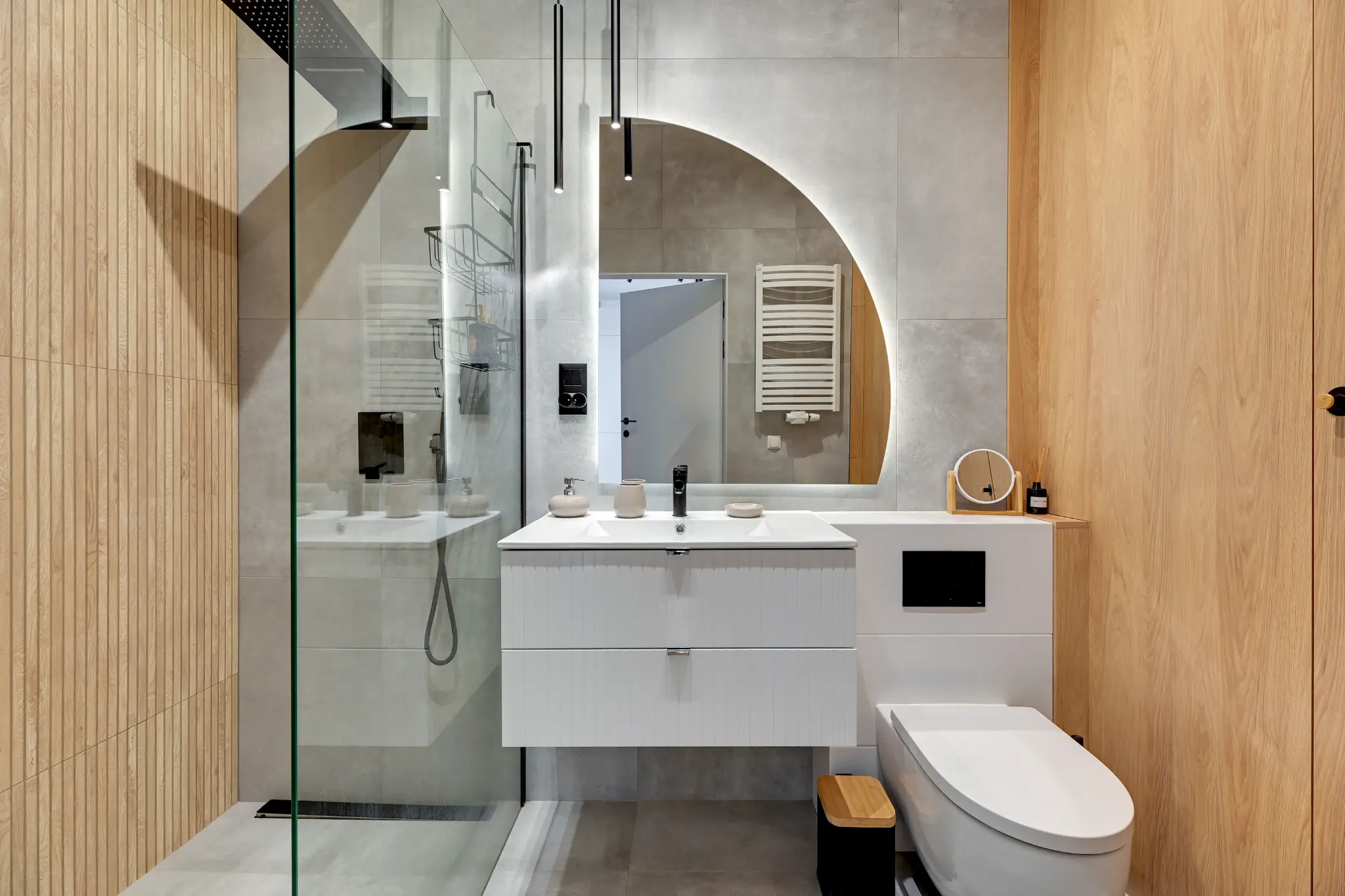
A backlit mirror can be a striking feature in a bathroom, but the effect seen in a photograph alone does not confirm that it will be convenient for everyday activities. Stand at the sink and check how clearly you can see your face with each light setting. Describe what you need for shaving or applying makeup instead of limiting the brief to “a backlit mirror.”
Treat the bathroom as a separate case to discuss with a specialist. Selecting fittings to suit the room’s conditions, as well as designing and installing the electrical system, are not tasks for an owner to undertake based on a guide. Even when updating an existing interior, do not move light points yourself or experiment with electrical connections.
Prepare a short brief for the designer
A floor plan with the furniture and a few specific notes are enough for the discussion. For each zone, note:
- the activity and the place from which the guest will use the light;
- which lights should switch on independently and where they should be controlled;
- possible layouts, such as an unfolded sofa or an extended table;
- the result of your test: what is convenient and what needs improvement.
Agree on lighting parameters, fittings and control options with the designer, and discuss installation solutions with an appropriate specialist. Do not buy fittings based only on the assurance that they are “bright.” First establish what effect they should provide in a particular place.
Also check cleaning and day-to-day use
General lighting is also useful when cleaning, as the IKEA guide points out.2 So check not only the evening ambience, but also whether you can see the whole room and surfaces that need cleaning. For day-to-day management, it is useful to record the models of the fittings installed and how to report faults.
When discussing an arrangement with GrandRent, talk about how technical support and cleaning will cover your apartment; the scope and costs are agreed individually. If you want to entrust your apartment to us for rental management, talk to GrandRent about the specific interior and its current furnishings. The initial conversation about entrusting the apartment to us for management is free of charge. It can be a starting point for deciding which lighting requirements are worth discussing before guests arrive.
Technical sources
The article explains the rules and questions you should ask the operator. Rental results and cooperation terms require analysis of the specific apartment.