
One apartment is missing a cup, another needs a kettle replaced, and a mattress cover has to be ordered for a third. Each purchase seems simple on its own. With several properties, however, you also have to find the right size, colour and product specification. It is therefore worth deciding in advance which items can be standardised.
Which furnishings are worth standardising across several apartments? Above all, items that need replenishing or replacing: crockery, cutlery, textiles in matching sizes and selected small appliances. Repeat larger appliances and furniture only where they suit the function and dimensions of the property. Standardisation should simplify purchasing and maintenance, not create identical interiors.
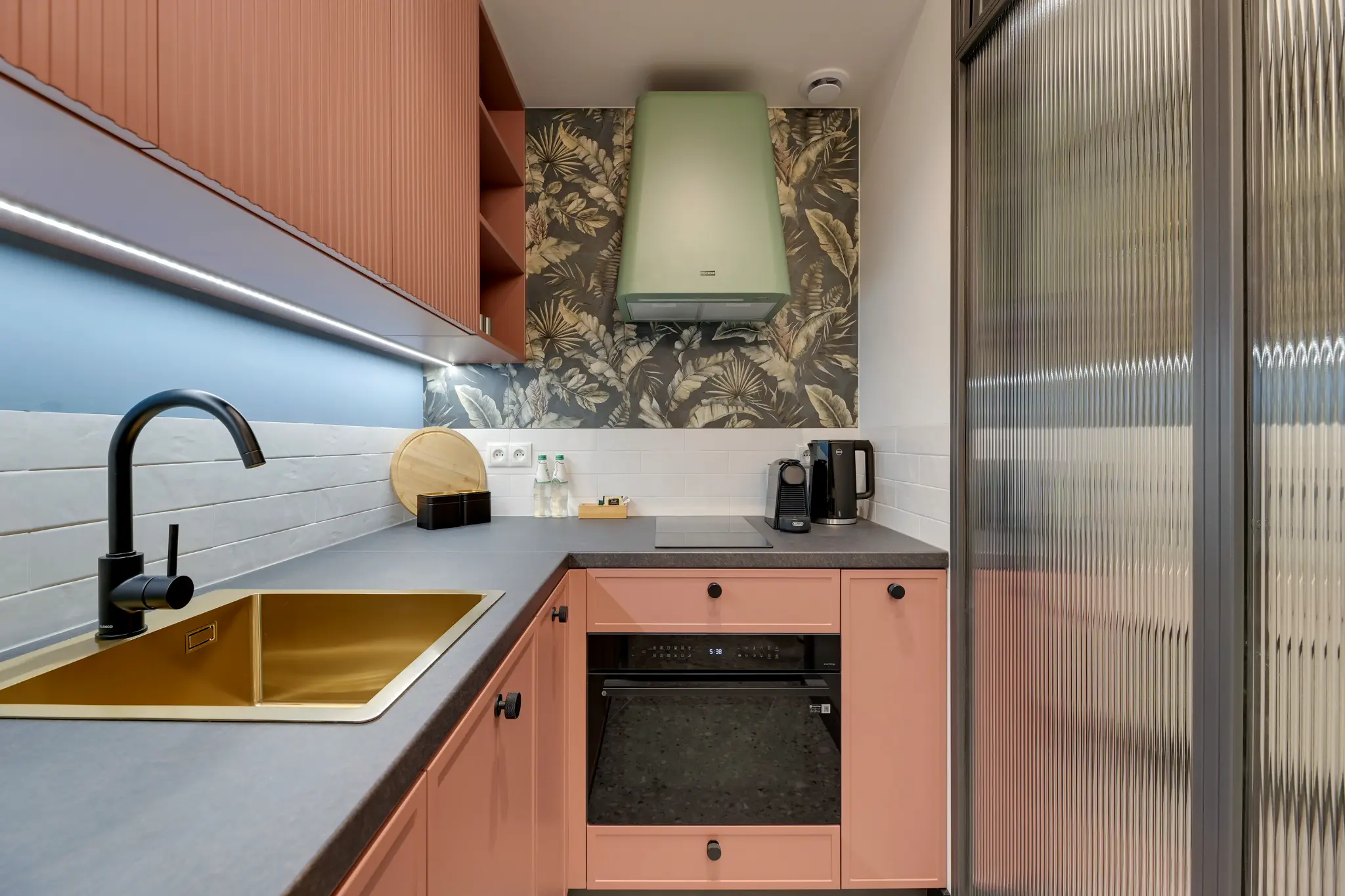
Start with items that need replenishing
A shared model of glasses, plates and cutlery is a good place to start. If one item goes missing, you can replace it without buying another set in a different style. Before choosing, however, check whether the supplier sells individual items and whether the product is suitable for the way it will be used, as described in its instructions. Buying a set does not guarantee that you will be able to purchase a single cup later.
Standardising the model does not mean having the same number of items. A studio apartment and a two-bedroom apartment can use the same range of crockery, but need different quantities. Decide how many items each property needs, taking into account the number of sleeping places and what guests have available in the kitchen.
Choose kettles and hairdryers in the same way. A shared model makes sense if its features suit all the properties. There is no point keeping a single item on the purchasing list if it takes up too much counter space in a small kitchenette.
Standardise textile sizes, not just colours
Two white duvet covers are not interchangeable if they fit different duvets. So, with textiles, start with the sizes of the beds, mattresses, pillows and duvets. Only then choose ranges of bed linen and towels. Limiting the number of variants can make it easier to put sets together, but should not come at the expense of sleeping comfort.
Suppose an owner is furnishing three apartments from scratch. The same beds could be used in two of them, while the bedroom layout in the third calls for a different solution. A sensible standard would include a shared set for the two properties and a separately labelled variant for the third. There is no need to replace a functional bed just so that all the sheets are the same size.
Also check the manufacturer's care instructions when choosing. The quantity in reserve should reflect the actual laundry and replacement arrangements, rather than follow a rule of “the same amount for every apartment”.
Choose appliances by model and fit
Using one brand does not in itself create a standard. Two appliances from the same company may have different features and parts. Bosch's spare-parts search tool identifies the E-Nr model number on the rating plate as the basis for finding the correct parts.1 It is therefore worth adding the exact model designation and a photo of the rating plate to the furnishings documentation, rather than simply noting “Bosch dishwasher”.
Consider using the same dishwasher or oven model when preparing new properties or planning a replacement. First, confirm that the appliance fits the cabinetry and check the installation requirements with the person responsible for the installation. A similar appearance is not enough to consider appliances interchangeable.
Do not replace a working appliance simply to tidy up the inventory. For an existing portfolio, you can choose a preferred model for future purchases while keeping records of appliances already in use. This separates the direction of future purchases from the unnecessary replacement of all the existing equipment.
Look for repeatable parts in furniture
When choosing furniture, it is worth asking not only about its appearance but also whether individual parts can be purchased separately. IKEA's Polish spare-parts page describes how to order small parts such as screws, knobs and caps.2 This is an example of an offer to check before buying, not a promise that every part for any piece of furniture will be available.
A shared range of chairs or handles can be practical if it suits several interior designs. Keep the product designation and instructions. If the manufacturer offers a replaceable cover, check that it is compatible with the exact version of the furniture. Do not assume compatibility based on the collection name alone.
Keep differences that reflect each apartment's function
An apartment for a family may need a larger table, while a property for a couple may need smaller furniture and more open space. Work areas and storage arrangements may also differ. A shared purchasing catalogue should leave room for these needs.
So separate furnishings that do not require an individual choice from elements that give an interior its character. The same cutlery can go in kitchens with different cabinet fronts. Colour schemes, decorative lighting and furniture layouts need to be assessed for each specific space. This is where interior design helps, rather than copying one apartment into the next.
For a larger furnishing project, you can also look at the Aura 40 project—a turnkey package of six apartments. The scope of the project alone does not, however, establish that identical furnishings were used in them.
Choose alternatives and introduce the standard gradually
A concise purchasing catalogue should help you choose an item, not merely describe the condition of a property. For repeatable items, record:
- the exact model and relevant size or variant;
- the quantity needed for that apartment;
- a tested alternative and the conditions for compatibility;
- where the documentation and available reserve stock are kept.
Test an alternative before adding it to the list. A different plate may not fit the stack of crockery in the cupboard, and a larger kettle may not fit the space provided. A small reserve of shared everyday items is useful if you know where it is kept. It does not need to include expensive appliances for every hypothetical breakdown.
Test the standard in one property first. If the items fit and can be replenished, expand the selection with future purchases. Approval and responsibility arrangements are a separate topic, covered in the guide on organising decisions across several apartments.
Discuss the furnishings before entrusting management
When discussing portfolio management, it is worth sharing a list of models and identifying the items that should remain specific to each property. The scope of purchases, repair costs and authorisations need to be agreed; shared furnishings do not replace those arrangements.
Do you have several apartments, or are you preparing another property in Trójmiasto? Talk to GrandRent about the specific apartment and entrusting us with rental management. The initial conversation about this is free of charge. You can bring a furnishings list and planned purchases to discuss what is worth standardising and where a separate solution should be retained.
Technical sources
The article explains the rules and questions you should ask the operator. Rental results and cooperation terms require analysis of the specific apartment.