
In a shop display, a balcony set looks lightweight. Once it arrives, you find that an armchair blocks the door, there’s nowhere for the cushions to dry, and cleaning means moving half the furnishings. In a rental apartment, it’s worth sorting out these little details before the first stay, rather than leaving them to guests and the people looking after the property.
How can you furnish an apartment balcony without making it harder to maintain? Start with a clear passage and a small set of furnishings suited to how the space will actually be used. Before buying, check the care instructions, plan where dry cushions will go, and find out what restrictions apply in the building. Only then choose the decorations. A good balcony doesn’t have to fit everything that can be squeezed onto it when folded away.
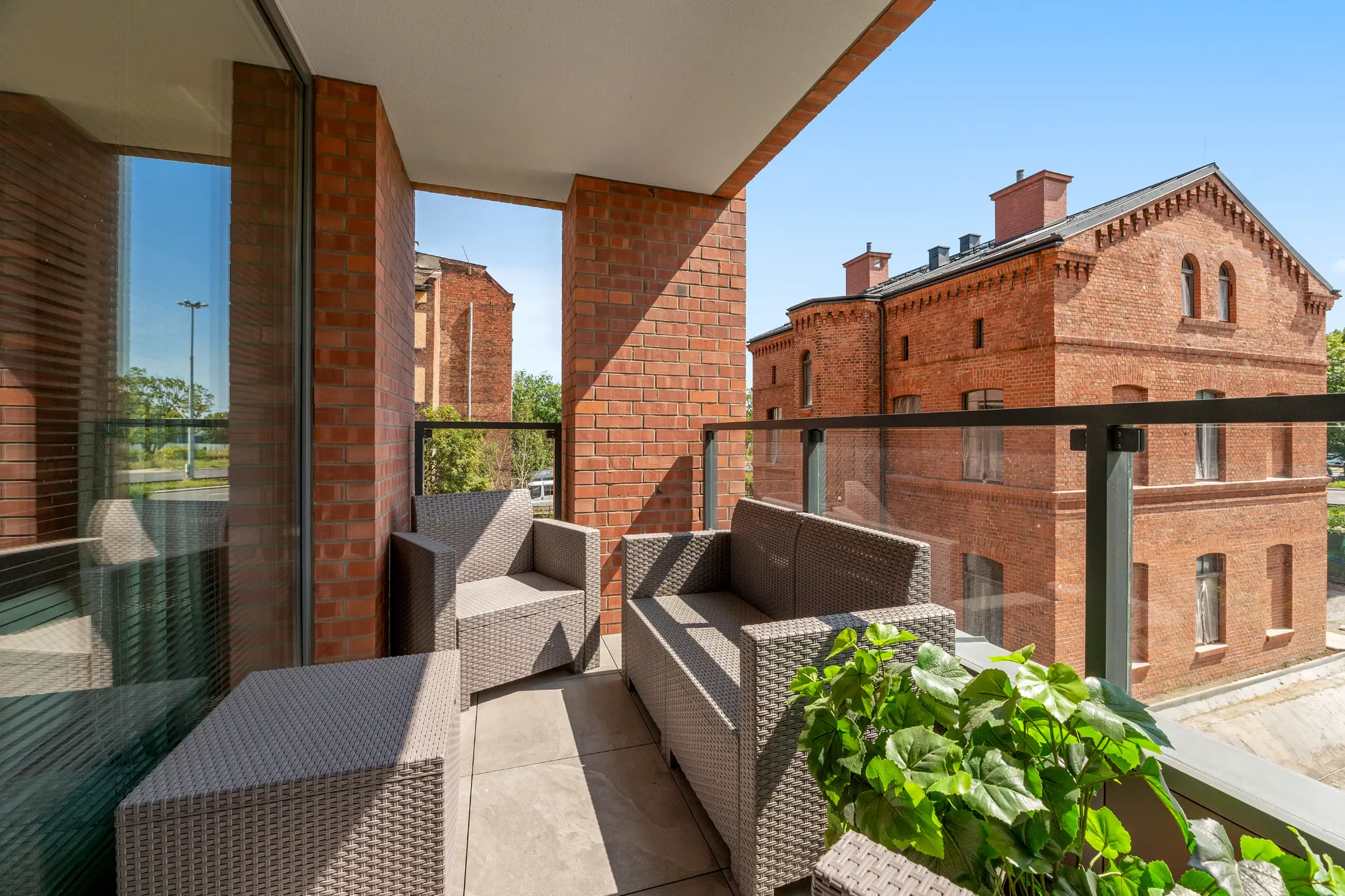
Measure the usable space, not just the floor area
Floor area alone won’t tell you whether two armchairs will be comfortable. Measure the balcony’s width, the position of the threshold, and the space taken up by the open door. Allow room to pull a chair out, walk in with a cup, and access the floor and railing when cleaning. Sketch a simple layout or mark out the planned furniture with tape that can be safely removed from the surface.
On a hypothetical narrow balcony, two deep armchairs might fit side by side, but once guests are sitting in them, they block the way to the far end. Two shallower chairs and a small table may be a more sensible choice. It’s not about maximising the number of seats, but making sure they can be used comfortably.
If you’re furnishing the apartment at the same time, treat the balcony as part of the interior design project. After all, storage for its furnishings may be inside the apartment.
Choose a set that’s easy to manage
First decide on the main purpose: morning coffee for two, quiet reading, or a meal at the table. On a small balcony, trying to accommodate all these uses usually means having too many items. For a rental, it’s better to offer one comfortable option than several that require constant rearranging.
Before ordering, check not only the dimensions but also the weight of each item and how it folds. The person cleaning should be able to reach underneath the furniture without complicated disassembly. A folding chair makes sense if there’s a designated place for it once folded, rather than leaving it propped against the door.
In the showroom or on display, try this quick test:
- Sit at the table and check whether there’s enough legroom.
- Pull the seat back as a guest would.
- Lift or move the furniture to see how easy it is to clean around.
- Fold the items and check their dimensions for storage.
This is an addition to your purchasing decision, not a substitute for the instructions for use. We discuss broader furnishing mistakes in a separate guide; here, the existing balcony layout is what matters most.
Read the documentation before choosing a material
The label “garden furniture” isn’t enough to determine how a set will fare on a particular balcony. Look for assembly instructions, cleaning guidance, and recommendations for off-season storage. Check whether the manufacturer also provides information about cushions and covers, and lists any usage restrictions. Keep the model name and documentation so you don’t have to rely on memory when choosing cleaning products later.
Wood doesn’t have to be a poor choice, but you need to factor in its care requirements. In its guide, IKEA recommends refinishing the coating on wooden outdoor furniture, with the frequency depending, among other things, on exposure and use.1 Don’t treat this as a universal schedule for every product. The instructions for the specific set you choose should be your point of reference.
Assess wicker and metal in the same way: instead of buying based on appearance alone, check the requirements for the specific model. If the information isn’t clear, ask the seller for documentation or choose a product with clearly stated care instructions.
Plan where to store cushions and accessories
Soft cushions make seating more comfortable, but they need somewhere to go in bad weather and outside the season. Don’t assume that every balcony storage box will provide suitable conditions. Check its intended use, instructions, and capacity against the actual dimensions of the textiles. Think about how the lid opens, too: a box that has to be pulled out from under the table every time will be awkward to use.
IKEA recommends making sure cushions are completely dry before putting them in a bag or storage box. It also advises following the care label when washing them.2 A removable cover is useful only if you know how to wash it, dry it, and put it back on. Don’t add your own temperatures or cleaning methods to the manufacturer’s instructions.
In a hypothetical apartment with no storage cupboard, comfortable seats without extra cushions may be a better choice than an elaborate set of textiles stored in the guests’ wardrobe. Choose plants to suit the level of care you can provide, too. One planter with an agreed watering routine is simpler to manage than several decorative plants needing different treatments.
Check building restrictions before installation
Before ordering an awning, screen, item attached to the railing, or heavy planter, check the building documentation and ask the administrator about the rules for the solution in question. Find out what information is needed to assess the installation and load. A product being offered for sale doesn’t confirm that it can be used in every building.
Don’t decide on your own whether work affects the façade, railing, or floor layers. If in doubt, consult the administrator and an appropriate specialist. Don’t block areas needed for inspecting or maintaining the balcony with furnishings. This step concerns furnishing a space you already have, not assessing a balcony’s appeal before buying an apartment.
Agree on a maintenance routine before guests arrive
Once the furniture is in place, try cleaning the balcony. Check that you can open the door, reach the corners, and put all the accessories away in their designated places. Agree who puts away the textiles, when the condition of the furnishings is checked, and where any damage is recorded. A short guide for guests should explain only the tasks you actually expect them to do.
It’s worth agreeing on the scope of technical maintenance and cleaning for the balcony, not just the apartment’s interior. Discuss off-season storage and how to report work that needs doing with the person looking after the property, without assuming that every additional task is included in the price.
Would you like to prepare a balcony and an entire apartment for rental in Trójmiasto? Talk to GrandRent about the specific property, its furnishings, and the scope of management you’re looking for. The initial conversation about entrusting the property to us for management is free; other services and their scope are agreed individually.
Technical sources
The article explains the rules and questions you should ask the operator. Rental results and cooperation terms require analysis of the specific apartment.