
Two apartments in similar locations, with comparable budgets and one clear compromise: one has a balcony, the other more living space. Should you choose an apartment with a balcony or a larger living area? First, make sure the interior is comfortable for the number of guests you plan to accommodate. Paying extra for a balcony is worthwhile when it will be genuinely useful and will not come at the expense of basic comfort in the living room.
So this is not a simple case of “the balcony always wins.” A table, room to walk past an unfolded sofa, and space for luggage may matter more than being able to step outside. On the other hand, a comfortable balcony can complement a small but well-designed apartment.
First, decide who you want to rent to and for how long
Start with how the property will be used, not with the more appealing photo in the sales listing. For an apartment intended for a couple, you could consider a smaller living room and a comfortable balcony. If you plan to host a family and the living area will also be used for sleeping, first check whether it can accommodate both people and their belongings at the same time.
For longer stays, it is worth planning space for working and eating meals every day. Do not assume that the balcony can serve these purposes: its use depends on the conditions outside. The same apartment should therefore be assessed differently for a weekend away as a couple and for a stay lasting several weeks.
Airbnb allows guests to narrow their search using features such as amenities 1. However, this is not proof that a particular balcony will increase the price or the number of bookings. Treat it as a feature of the listing whose usefulness needs to be assessed in the context of the property as a whole.
A larger living room makes sense if it improves the layout
Extra indoor space is valuable when it solves a specific problem. It may make it possible to fit a table without blocking the walkway or to separate a work area from the space for relaxing. But it adds little if it only enlarges an empty area by the entrance while the rest of the room remains difficult to use.
During a viewing, imagine the living room in the evening, with the sofa unfolded. Is there still access to the balcony? Can another person get to the bathroom? Where will an open suitcase go? Questions like these reveal limitations that are not apparent on a floor plan showing only folded-out furniture.
Do not decide based on the floor area alone. Before buying, you can explore furniture layout options as part of interior design, rather than counting on a smaller sofa to solve every problem later.
Assess the balcony as a usable space, not a symbol on a floor plan
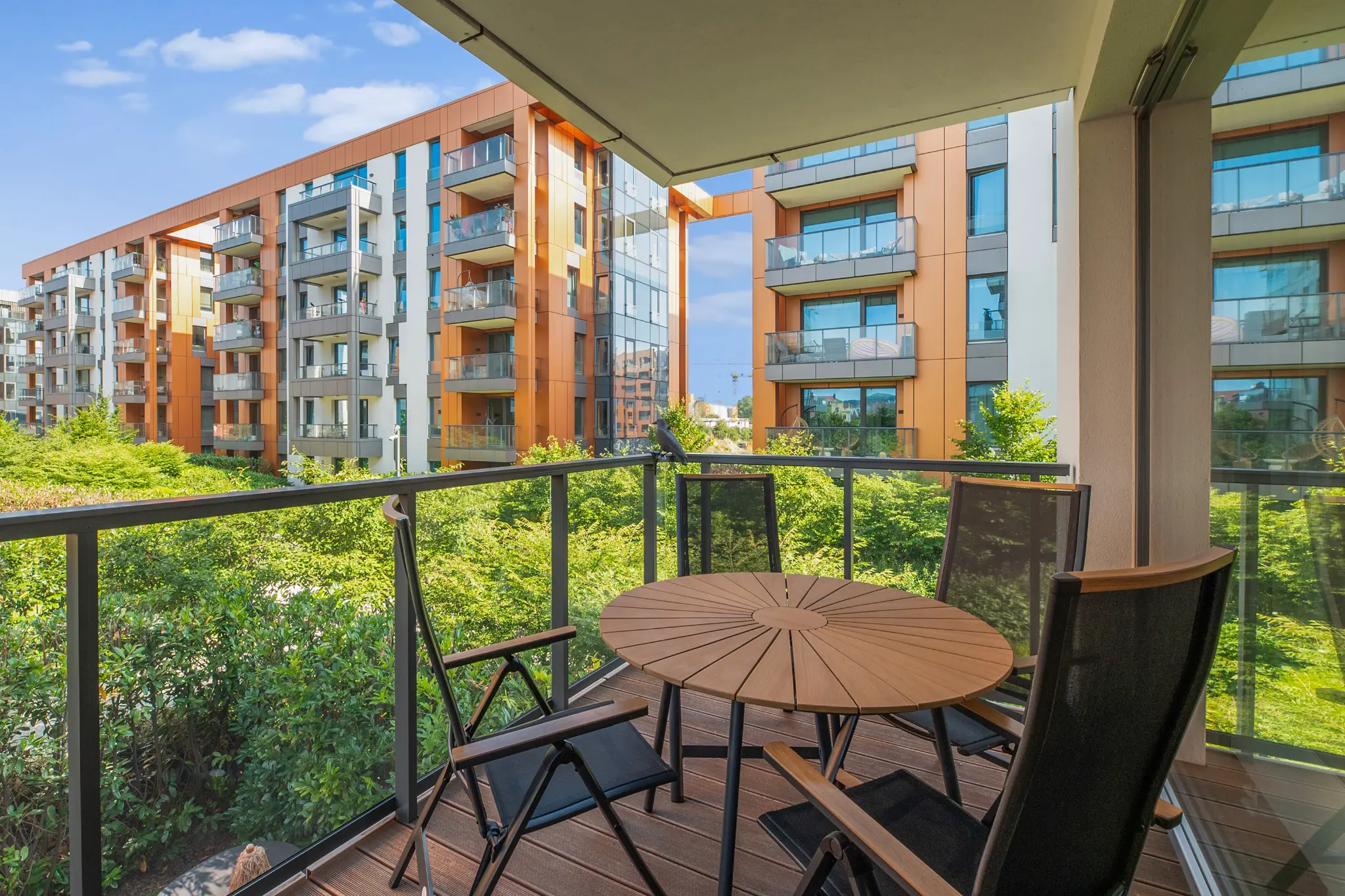
A balcony may look promising in the documentation but be too narrow for the intended use. Check whether you can open the door and enter the apartment easily when seats are occupied around the table. If you are planning an apartment for four people, do not treat a balcony that is comfortable for two as an additional place for the whole group to eat together.
The surroundings also matter. Step out onto the balcony instead of assessing it through the glass. Pay attention to noise, how close other windows are, and whether the canopy limits the view or the light inside. A photo taken at a favorable time will not answer all these questions.
You are not buying only outdoor floor space. You are buying the opportunity to use it in conditions that are acceptable to the people your listing is aimed at.
Compare privacy separately for each option
A spacious balcony is not necessarily somewhere a guest will feel comfortable. A nearby neighboring balcony, windows facing yours, or a walkway right below the apartment are all reasons to look closely at privacy. Greenery in a photo does not tell you what things look like from the perspective of someone sitting at the table.
Assess the larger living room just as carefully. If the outside view makes it necessary to keep the windows covered, extra floor space alone will not solve the problem. During the viewing, assess both options from the places where the sofa or table would actually go. Do not substitute a general assumption that a higher floor or a courtyard always ensures peace and quiet.
A balcony also means tasks to factor into management
A purchase comparison should include upkeep, not just the property price. A living room requires routine cleaning. With a balcony, you also need to plan for cleaning the outdoor surface and looking after any furniture or other items left there.
The maintenance required depends on the materials. For example, IKEA recommends renewing the protective finish on its wooden outdoor furniture; the frequency depends on use, location, and exposure to the weather 2. This is not a universal instruction for every balcony, but it is a good reason to check manufacturers’ recommendations and consider where the furnishings can be stored before you buy.
Visible damage to the surface or railing requires a separate assessment by a specialist, not an estimate based on photos. A pre-purchase inspection covers a broader range of checks; the point here is not to confuse maintenance costs with the cost of furnishing the apartment itself.
Assess the extra cost against two specific use scenarios
Suppose, hypothetically, that you are choosing an apartment for a couple. In the first option, the living room accommodates comfortable seating, a table, and luggage, while the balcony provides extra space to relax. In the second, the living room is larger, but the additional space serves no purpose you need. In this comparison, the balcony may be the more reasonable choice.
Now change the assumption to family stays, with guests sleeping in the living room. If the unfolded sofa blocks the walkway in the first apartment, the larger interior may be more important. This is not a forecast of financial performance, but a test of whether the apartment fits your rental plan.
Before deciding, briefly write down:
- who will use the apartment and how many people you plan to accommodate;
- how the living room works once the sleeping spaces are set up;
- what people can actually do on the balcony;
- what additional tasks and expenses you expect.
Only then add the purchase price and the cost of preparation to the comparison. An individual investment analysis may help organize your assumptions, but it does not replace them with a guarantee of profit.
Choose the space that suits the specific property
If the balcony compromises the living room’s basic functionality, choose the larger living area. If the interior already meets the needs of your planned guests, and the balcony offers a comfortable place to spend time with acceptable privacy, it is worth considering the extra cost. There is no single winner regardless of the apartment’s layout.
Do you have two floor plans, or are you viewing a specific apartment in Trójmiasto? Talk to GrandRent about its intended use and the possible management of its rental. The initial conversation about entrusting the property to us for management is free of charge. Investment analysis and other services are separate paid services, with scope agreed individually.
Technical sources
The article explains the rules and questions you should ask the operator. Rental results and cooperation terms require analysis of the specific apartment.