Two apartments in the same development may require entirely different rental plans. One has a separate bedroom and convenient parking access. Another impresses with its view, but its layout makes a family stay or working at the table difficult. The name of the development alone will not tell you which unit suits your plans.
That is why a conversation about buying should begin with how the property will be used. Will the apartment be used mainly for rental, or also for your own stays? Do you want to host guests for a few days, people staying longer, or perhaps a long-term tenant? The answers help you assess a specific offer instead of choosing solely on the basis of visuals.
GrandRent manages apartments in Gdańsk and helps buyers connect their choice of unit with a later rental plan. This guide is not a ranking of developments. It sets out questions worth asking before the purchase becomes a reality.
Define the purchase goal before choosing a development
Before comparing apartments, note what you want to achieve and how you intend to use the unit. An apartment available to guests for most of the year, a home for longer stays and an owner's second home have different requirements. There is no need to rule out any model immediately, but it is worth knowing your priorities.
If you are planning your own stays, note their approximate dates. A week for your family during a period of high guest demand affects the apartment's availability. This is not an argument against using your own property; it should simply be included in the assumptions on which you base your purchase decision.
Short-term rental in Gdańsk calls for preparation for changing guest stays. With longer rentals, everyday comfort, workspace and storage become more important. The model must also suit the unit's designated use, documentation and the rules for using the building.
Gdańsk offers varied locations — not a single rental formula
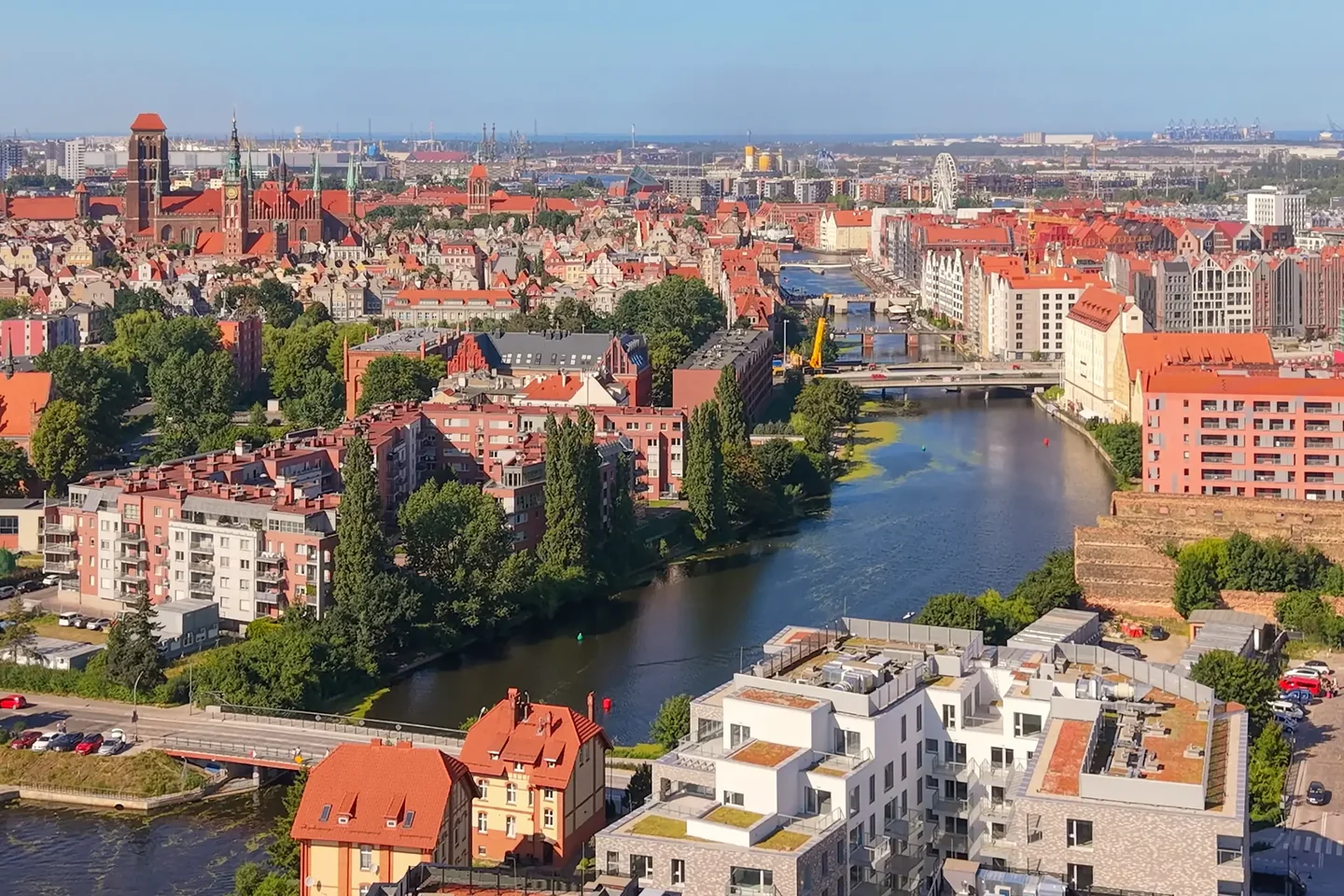
Proximity to the city centre, a waterfront promenade, or a park and beach helps describe a stay. It does not, however, replace an assessment of the apartment. Rather than asking which development is best for everyone, check what its surroundings contribute to your planned use of the unit.
In Brabank and DOKI, GrandRent already manages apartments. This provides a point of reference for discussing a specific layout, access and the everyday organisation of rentals; it is not evidence that every unit in these developments will rent in the same way. See the Brabank profile and the DOKI profile if you are considering a purchase in this part of Gdańsk.
OFF Miasto on Toruńska Street, by the Stara Motława, is another example of a purchase with a plan to prepare a unit for rental. We welcome buyers and owners who are finishing apartments there. The OFF Miasto profile shows which decisions are worth discussing before ordering furnishings; it does not mean that every unit has a water view or the same readiness date.
In Przymorze, the conversation may include the proximity of Reagan Park and coastal walking routes. GrandRent also manages apartments in Bulvar Apartments. Treat the Bulvar Apartments profile as the starting point for a conversation about a unit on Czarny Dwór Street. Parking, amenities and the handover date must still be confirmed individually.
Compare specific units, not floor areas alone
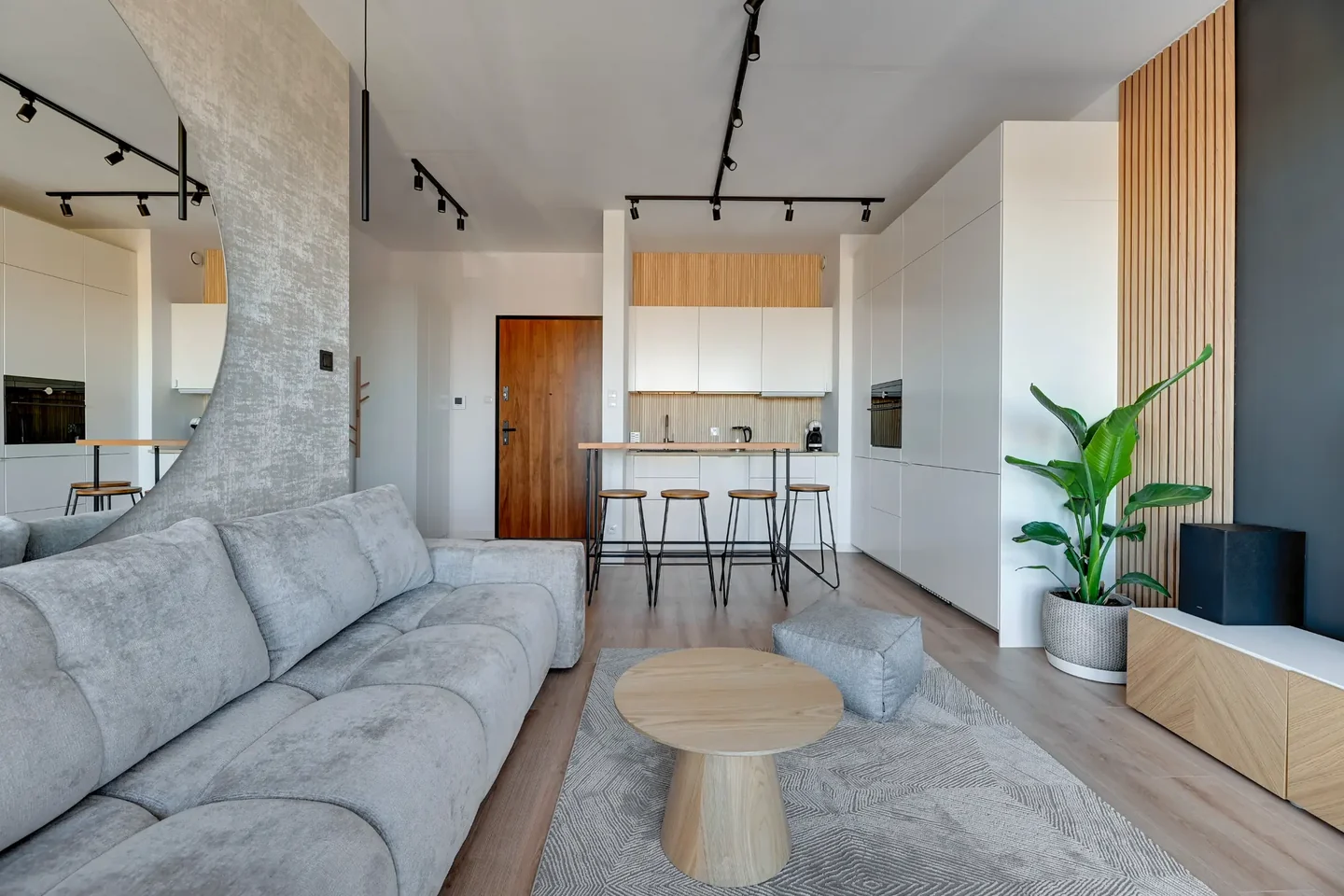
A floor plan tells you more than the floor area in a listing. Check how much space remains after placing the bed, table and fitted furniture. See whether guests can use the living room comfortably when the bedroom is occupied, and where they will keep their suitcases and clothes.
When viewing a unit, pay attention to light, privacy, possible sources of noise and the actual view. Also ask about the route from the parking space to the apartment door, the lift and how the building is accessed. These elements affect everyday comfort and the organisation of a stay, although they are not always visible in a visualisation.
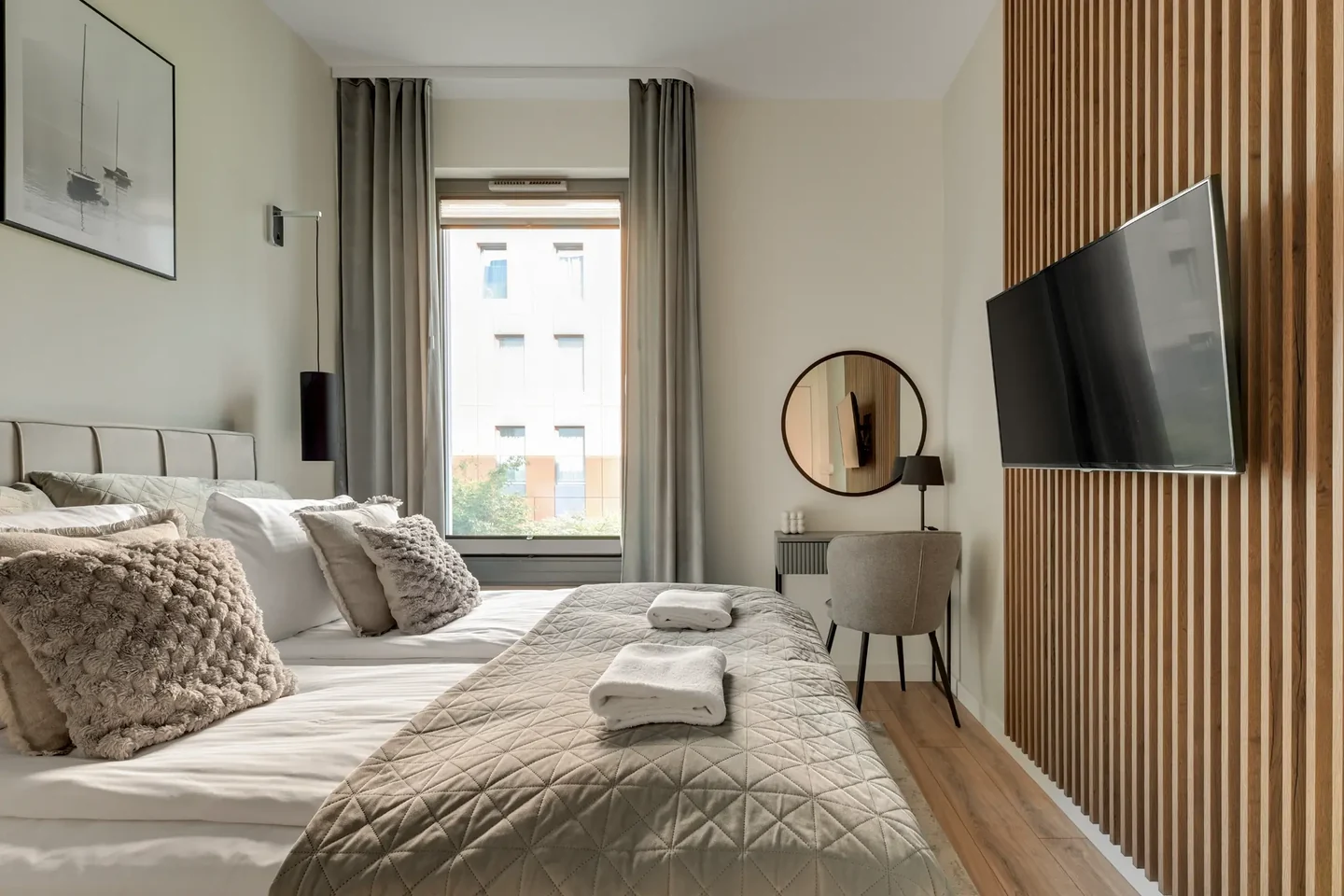
A higher stated number of sleeping places does not necessarily mean a better rental unit. Additional sleeping space makes sense only when there is also room for comfortable passageways, enough seats at the table and guests' everyday belongings. At the purchase stage, it is worth checking this possibility on the floor plan before it becomes an assumption for the entire listing.
Check the building and documents before deciding
The word ‘apartment’ in sales materials is no substitute for information about the designated use of a specific unit. Ask for the documents and an explanation of which usage rules will matter for the planned rental. Confirm legal or tax matters with a specialist appropriate to your situation.
Establish what the purchase actually includes: handover standard, parking space, storage unit, access to common areas and the related fees. A recreation area visible in a photograph does not establish that every guest has the right to use it. Access rules and costs need to be known before presenting an amenity in a rental listing.
In a development completed in stages, ask about the schedule for your unit and the scope of further work in the surrounding area. Handover of one part does not mean the whole project has been completed. The rental start date should follow the apartment's actual readiness and conditions in the building, not a sales announcement alone.
The budget does not end with the purchase price
When comparing offers, include the price of the unit and the expenses needed to make it ready. These may include finishing, furnishings, a parking space, listing preparation, as well as transaction and financing costs relevant to your purchase. Not every item appears in the seller's first cost breakdown.
Plan for later running costs separately: unit-related fees, utilities, agreed management costs and funds for repairs or replacement of worn furnishings. In the first months, the apartment may require spending before a full rental rhythm develops. It is worth deciding how you will cover these costs.
Do not compare booking revenue alone with the total purchase cost. What remains for the owner after management costs is a different measure from an apartment's turnover. We explain the distinction in the guide Rental revenue and the owner's payout. Financing and taxes need to be considered separately, based on your own situation.
Ask about a forecast together with its assumptions
If you receive a rental forecast, ask which rates, number of available days, seasonality and costs it includes. Check whether the comparison concerns apartments with a similar layout and standard. Results for a larger unit or an apartment with different amenities do not automatically transfer to your listing.
It is worth discussing a cautious, base and favourable scenario rather than just one appealing amount. Your own stays, the launch date, periods without bookings and running costs should be visible in the assumptions. Historical results for other apartments are material for analysis, not a guarantee of future income.
GrandRent has operated in the Tricity since 2012 and draws on experience of managing actual apartments. As part of agreed advisory services, we can compare the identified units, discuss costs and prepare scenarios with stated assumptions. We tailor the scope of analysis to the decision you want to make.
Prepare questions for the seller and operator
You do not need an extensive report to start the conversation. Prepare the listing, floor plan, price, information on the standard and planned handover date. Add your own plans for using the unit. With this starting point, it is easier to establish what else is missing before making a decision.
- What is the designated use of the specific unit, and what needs to be confirmed for the chosen rental model?
- What does the price include, and which expenses remain outside it?
- Does the floor plan allow the unit to be comfortably furnished for the planned number of people?
- What are the rules for access, parking and use of common areas?
- When will the unit be ready for finishing, and what else will be carried out in the surrounding area?
- Which data and costs underpin the stated rental assumptions?
- What will the operator take over, what will remain the owner's responsibility, and how will expenses be settled?
After purchase, the next step is preparing the apartment and agreeing the rental launch. We describe this stage in the guide Brabank & OFF Miasto: from key handover to the start of rental. It is worth reading before ordering furnishings, but it should not be treated as a substitute for checking the purchase documents.
GrandRent: from purchase decision to unit management
Are you considering buying an apartment in Gdańsk and want to entrust its rental to an operator later? Tell us which offers you are considering and what stage you are at. We will help establish what is worth analysing before choosing and what to prepare for later management.
Detailed investment advisory is a separate, paid service. Before work begins, we agree the scope, timeframe and fee; an enquiry itself does not commission an analysis. Explore GrandRent investment advisory if you need a comparison of specific options before purchase.
If you already own the apartment, the initial conversation about entrusting it for management remains free of charge. We can discuss management of a ready unit itself or preparation for the start of rental. Design, finishing and management have their own agreed scopes; you do not have to order all services at the same time.
We manage apartments in Brabank, DOKI and Bulvar Apartments, as well as other units in Gdańsk. We welcome other owners, including buyers in OFF Miasto and other new developments. Explore apartment management for owners and tell us about your unit. We will start the conversation with your plans, not a generic promise of results.
Frequently asked questions
Which development in Gdańsk is best for rental?
There is no single answer for every buyer. The specific unit, preparation cost, designated use and building rules, rental model and the owner's plans all matter. Brabank, OFF Miasto, DOKI and Bulvar are examples of different starting points for analysis, not a profitability ranking.
Is it worth speaking to an operator before buying?
Yes, if you want to check how a specific unit can be prepared and managed. At GrandRent, a detailed comparison of offers and scenarios is paid advisory work, with scope and pricing agreed before it begins. The initial conversation about entrusting an apartment you already own for management is a separate, free-of-charge stage.
Does buying in a well-known development guarantee a rental result?
No. The address is one factor in the assessment, alongside the layout, standard, unit availability, costs and market conditions. Historical results for other apartments and an attractive forecast do not guarantee future income or occupancy.
What should I send GrandRent for the first conversation?
To begin with, the development name, a link to the listing or a floor plan, information about the purchase stage and your plans for using the unit are enough. Do not send identity documents or full agreements containing personal data in the first enquiry. We will agree the scope of required materials later.
This guide presents general selection criteria and questions to check, not individual investment, legal or tax advice. Assessing a specific unit and rental results requires separate analysis; neither is guaranteed.