
A family asks about an apartment for a few weeks, but cannot yet give a definite departure date. They have left their previous home, while the new one is awaiting handover or the completion of renovations. For the owner, this is a different task from preparing a property for a weekend: it needs to accommodate everyday life, some belongings and uncertainty about when the stay will end.
How can you adapt an apartment for a family waiting to move into their new home? Start by checking whether they can cook, do laundry, sleep and store their belongings comfortably without blocking walkways. Then agree on a specific stay period and how you will discuss a possible extension. Do not promise an open-ended calendar, even if you very much want to help.
First, understand the family’s daily routine
This is not about an employee housed by a company. We cover that scenario separately in our guide to corporate stays in Trójmiasto. A family between homes arranges its own stay; getting to school, having somewhere to park a pushchair or being able to share dinner may matter more than being close to an office.
Before confirming the stay, ask about matters that genuinely affect the choice of apartment:
- How many people are coming, and how many separate sleeping spaces do they need?
- Are they bringing mainly suitcases, or also boxes and larger items?
- How often do they plan to cook, and do they need space to study or work?
- When do they expect to move, and what might delay that date?
The answers will help you assess whether the apartment is suitable without collecting details about their private circumstances. If the layout does not meet their needs, it is better to say so before they arrive than to try to make up for their disappointment with additional promises.
Make room for belongings, not just suitcases
A spacious wardrobe is of little help if half of it is taken up by the owner’s supplies. Make sure there is genuinely empty space for clothes, a shelf for groceries and somewhere to put bags. Put away excess decorations if they take up useful space. There is no need to strip the interior of its character, but the family should have somewhere to put their own things.
Imagine a couple with a child arriving with a few suitcases and boxes of books. An empty section of the wardrobe and an agreed place for the boxes may be enough. The same apartment may not, however, be able to accommodate the furniture from their previous home. Be clear about the limits: the apartment is for staying in, not a substitute for storage.
Also check the route from the entrance to the storage areas. Belongings should not block doors or walkways. If there is no convenient place for a pushchair, let the family know rather than assuming they will leave it outside the apartment.
Prepare the kitchen for regular cooking
A kettle and two mugs are enough for a quick breakfast, but not for daily meals for several people. Assess the equipment with a simple test: can you prepare lunch and serve it to everyone in the household without improvising? Different-sized pots, a frying pan, a chopping board, a sharp knife and enough tableware for the number of guests will come in handy.
Clear counter space is just as important. If appliances and decorations are taking it up, reduce their number. Leave room for chopping, setting down a hot dish and putting away groceries. Check whether the fridge can hold more than weekend drinks. A dishwasher can make the stay easier, but it is no substitute for a well-equipped kitchen.
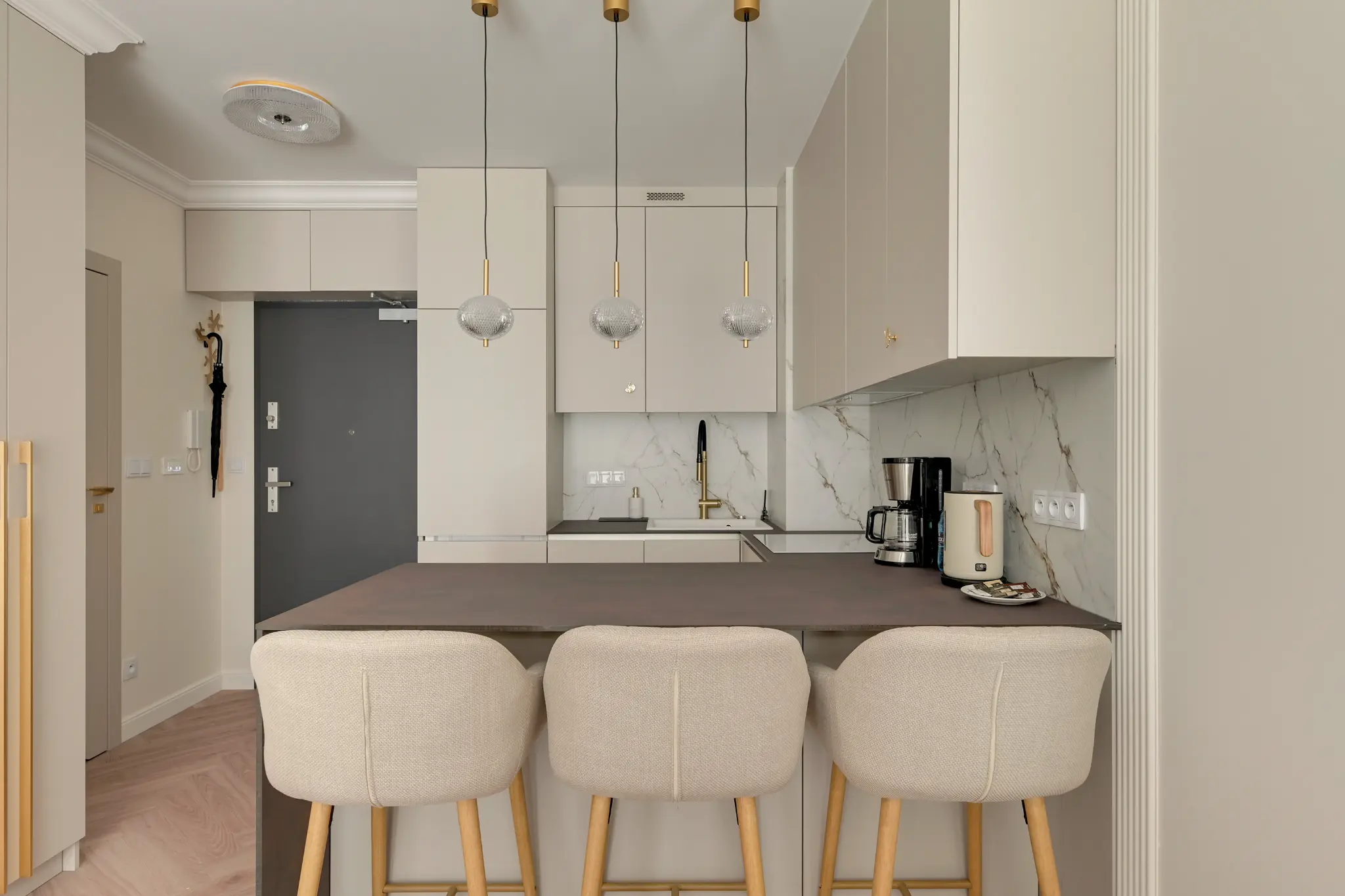
Count the places to eat, too. A counter with three chairs does not provide space for a family of four to eat together. A photo shows the layout, and the description should honestly explain what it can accommodate, not merely state that there is a kitchen.
Plan for laundry and rest without constant rearranging
For a longer stay, check not only whether there is a washing machine, but also how clothes can be dried. A drying rack should not take up the only walkway every day or prevent the sleeping area from being set up. Provide a short guide to the appliances so the family does not have to search online to identify the model.
Consider how the apartment works in the evening. If a child sleeps on a sofa bed in the living room, the rest of the household loses access to that space for part of the evening. This does not rule out the apartment, but it should be described clearly. A separate bedroom may be more important than another decoration or a larger television.
Also agree on how to report problems and on the agreed scope of cleaning and linen changes. A longer stay does not mean there is no contact. Well-planned guest support helps distinguish everyday use of the apartment from matters that require intervention.
Turn uncertainty about the end of the stay into clear arrangements
The family may give an expected date for taking possession of their new home, but the owner needs dates they can use to plan the calendar. Separate the confirmed stay period from a possible extension. Agree when the family will get back to you with an update, and who will check availability and present the terms for any additional days.
A message saying “we’d like to stay longer” should not, on its own, be treated as a final agreement. For example, Airbnb describes a process for requesting a change of dates, in which the reservation is updated once the request is accepted, as well as an immediate extension available in some cases. The rules therefore need to be checked for the specific reservation rather than assuming that all stays follow the same process. 1
In a hypothetical situation where renovations are delayed by a week, the apartment may already have other guests booked. Explain in advance that additional time depends on availability and confirmation of the terms. Do not suggest cancelling someone else’s reservation as a way to solve the family’s problem.
A stay reservation and a long-term tenancy are two separate discussions
For the purposes of organising the service, distinguish an extension of an existing reservation from considering a long-term tenancy. In the first case, you check specific additional dates and the terms of the stay. In the second, you discuss how the property will be used and the terms of the agreement, including payments, the scope of service and the arrangements for ending it.
Do not automatically suggest switching to a different model just because the move has been delayed. Ask whether the family needs a few more days or is now looking for a home for a longer, plannable period. This is an organisational distinction, not a universal legal classification. Any questions about which agreement is appropriate should be discussed with a specialist, taking the specific circumstances into account.
Assess your apartment before accepting this kind of stay
A family between homes is one scenario worth considering when planning rentals outside the holiday season. This does not guarantee a reservation or justify every renovation. First assess the layout, space for belongings and whether the stay can be accommodated in the calendar.
Do you have an apartment in Trójmiasto and want to check whether it meets these needs? Talk to GrandRent about the specific property, its furnishings and the possible scope of service. The initial conversation about entrusting us with rental management is free of charge; the scope and costs of any further services are agreed individually.
Technical sources
The article explains the rules and questions you should ask the operator. Rental results and cooperation terms require analysis of the specific apartment.