
The apartment is furnished, the bed is made, and everything looks good in the photos. But the owner knows where every switch is and how to operate the coffee machine. A first-time guest does not have that advantage. That is why, before making the listing available, it is worth checking not only whether the apartment has all the necessary equipment, but also whether it is convenient to use.
How can you conduct a trial stay in an apartment before welcoming your first guests? Arrive in the evening with your luggage, use the apartment following the instructions prepared for guests, stay overnight and go through your usual morning routine. Make a note of anything that requires you to guess, search for something or ask for help. Airbnb also recommends trying out an overnight stay or inviting friends to stay and give feedback in its guide for hosts.1 This is a usability test, not a technical inspection or a safety certificate.
Plan a trial without the owner's insider knowledge
Ideally, the person testing the apartment should not have furnished it or know it by heart. If you are staying there yourself, set aside your own assumptions and shortcuts: use only the information that a future guest will receive. Do not assume that “it’s obvious” where the spare remote is or which curtain to move.
Choose a scenario that matches the planned listing. For an apartment intended for a couple, check that both sides of the bed are usable and that two people can get ready to go out at the same time. If you also offer a sofa bed, unfold it and actually spend the night on it. Sitting on the sofa while it is folded up is not enough to assess the additional sleeping space.
The earlier stages of preparing the apartment are covered in the guide from keys to rental. This is about situations that do not come to light during a brief visit with a contractor or a viewing of the finished interior.
Arrive in the evening with a suitcase, not empty-handed
Start outside the apartment. Check whether the arrival instructions make it possible to find the right door after dark. Do not save access codes in an open note; instead, make a note of which part of the instructions was unclear. Once inside, try putting down your luggage, taking off your coat and turning on the light without moving any decorations.
Pay attention to the first few minutes. Is there somewhere to put wet shoes? Does your suitcase block the way? Is it clear where to hang your coat? A hypothetical example: a narrow hallway may look attractive, but once two suitcases are placed there, opening the wardrobe may become difficult. Rearranging the furnishings, rather than buying another piece of furniture, may solve the problem.
Spend an ordinary evening instead of just inspecting the appliances
Connect to the internet using the instructions provided, sit in the designated relaxation area and turn on the TV. Focus above all on whether the steps are easy to understand. Even a working device may need better organization if it is unclear which remote to use or how to return to the regular screen.
Prepare a simple meal using the available dishes and cookware. Take out a pot, open the drawers and put the plates on the table. This lets you test a sequence of activities, not just check an inventory of equipment. If the apartment is intended for four people, it is worth checking that the table can accommodate four place settings.
If operating an appliance holds up the test, note exactly where you ran into difficulty. Do not create a multi-page manual in response to every minor issue. Sometimes all that is needed is to put the information somewhere more visible; appliance instructions tailored to users’ actual questions can help.
Spend the night and check the bedroom in the dark
After turning off the main light, check whether you can reach a bedside lamp, find somewhere to put your phone and get to the bathroom. Use the curtains as a guest would. In the morning, note whether light coming in through the window disturbed your sleep, rather than judging the blackout conditions only at midday.
Listen for noises, but describe what you notice carefully. The refrigerator or a door slamming in the hallway may only become noticeable at night. Note the time, location and conditions. One quiet night does not justify claiming in the listing that the apartment is always quiet; equally, one noisy evening does not describe the whole year.
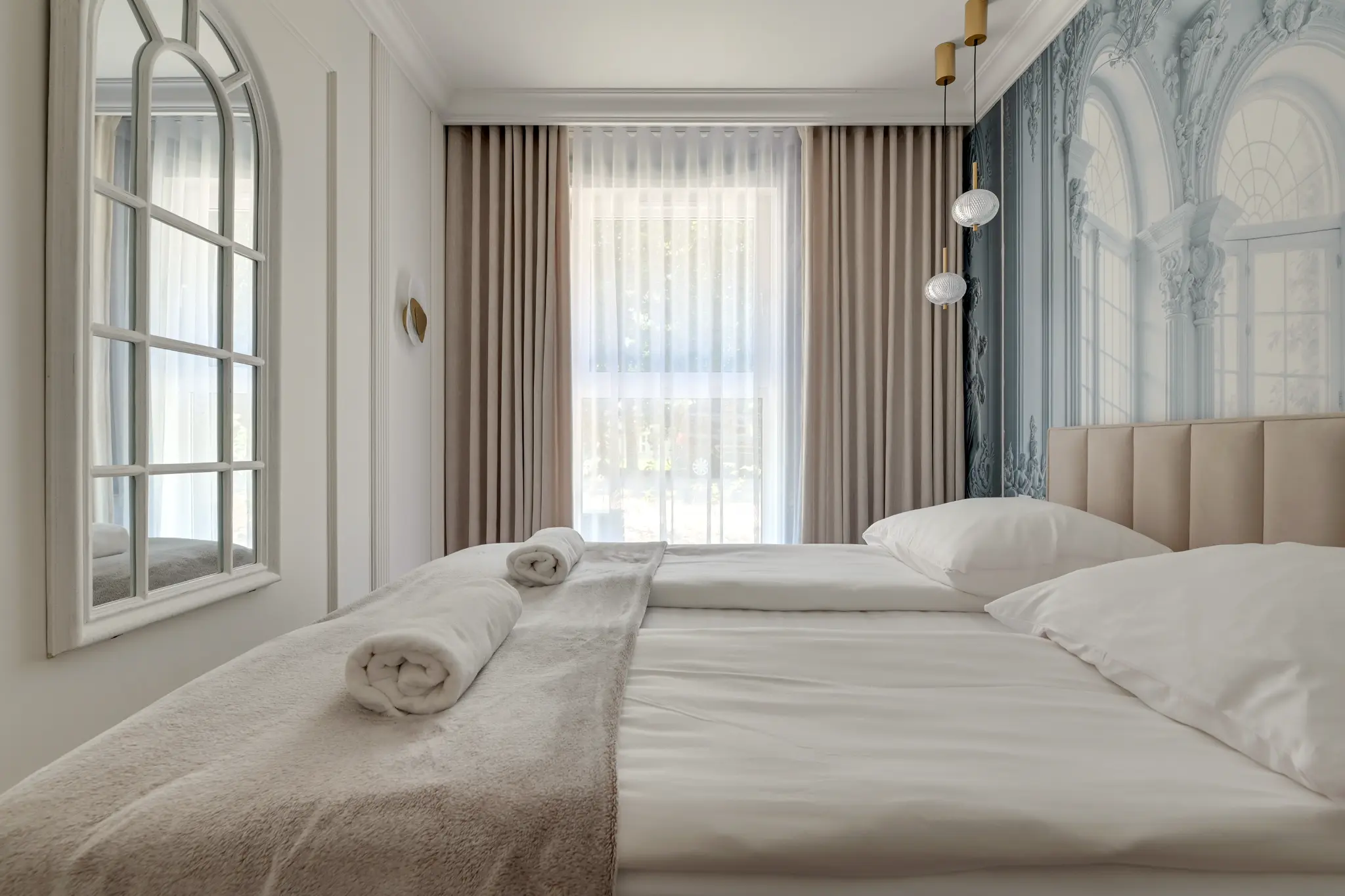
Check both sides of the bed. Hypothetically, one person may have a convenient bedside lamp and somewhere to put a glass, while the other has only a wall. This difference is easy to miss in a photo but immediately becomes apparent when staying overnight.
In the morning, try the shower, breakfast and getting ready to leave
Do not end the trial as soon as you wake up. Take a shower, put down your towel, make coffee and pack your luggage. Check whether everyday items have a sensible place: your toiletry bag should not have to go on the floor, and a wet towel should not need to be hung over a chair in the living room.
If the apartment is intended to accommodate several people, also check whether they can pass one another in the kitchen and access the mirror while getting ready. Finally, go through the steps required when checking out. Are the instructions for locking up clear? Does the guest know what to do with the keys? This is a better way to test the communication than asking the tester whether “everything was clear”.
Separate comfort from technical matters
A trial stay does not confirm that the installations are working properly or that the apartment complies with applicable requirements. PSP reminds property owners of the need for periodic inspections of gas installations, keeping ventilation and flue ducts clear, and using qualified service providers for gas appliances.2 The impression that everything worked during the overnight stay is no substitute for these steps.
Do not take appliances apart or try to find the cause of a worrying symptom yourself. Stop using the problematic appliance and refer the matter to an appropriate specialist. In your notes, distinguish between “the button is hard to find” and “the appliance needs to be checked.” The first is an operational issue; the second requires a professional assessment.
Turn your notes into fixes and a decision about when to launch
Your notes should describe the situation, what you observed, the proposed action and the person responsible. Instead of writing “the kitchen is inconvenient,” note: “when the dishwasher is open, the plates are out of reach; check whether they can be stored elsewhere.” Divide your notes into three groups:
- issues requiring a professional assessment before the apartment is made available;
- usability problems to fix before the first stay;
- minor improvements that can be planned for later.
After making changes, repeat the activity that caused the problem rather than automatically repeating the entire overnight stay. Also update the instructions or listing description if the trial revealed a discrepancy. The test results are worth using when arranging guest service, so that the person answering questions knows how the equipment actually works.
Do you have an apartment in Trójmiasto and want to discuss preparing it to welcome guests? We invite you to a no-obligation conversation with GrandRent about your specific property and the scope of management. The initial conversation about entrusting the property to us for management is free of charge; the scope of any further services is agreed individually.
Technical sources
The article explains the rules and questions you should ask the operator. Rental results and cooperation terms require analysis of the specific apartment.