
The bed is visible from the entrance, and in the evening one person wants to rest while the other is still sitting at the table. The studio owner starts thinking about a divider. Is it worth separating the sleeping area? Yes, if the division addresses a specific need and does not reduce access to daylight or make it harder to move around every day. No, if its only purpose is to make the studio look like it has an extra room in photos.
In an existing apartment, first check what is actually causing the problem: the view of the bed, light from the living area, or a lack of room to pass through. Each of these issues calls for a different solution. A divider alone does not turn a studio into an apartment with a separate bedroom.
First, identify what kind of privacy is missing
Privacy may simply mean screening the bed linen from the view of someone entering the apartment. In that case, there is no need to enclose the entire area straight away. Sometimes all it takes is rearranging a piece of furniture or adding a short screen beside the bed that still leaves a comfortable entrance.
The situation is different when guests are expected to use both parts of the studio at the same time. Blocking the view is not the same as screening someone from conversation, the television, or light. If you expect sound insulation, do not assume the divider will provide it based on its appearance: the specific solution and its performance need to be assessed. For the owner, the more important question than the material's name is what level of comfort they can honestly offer.
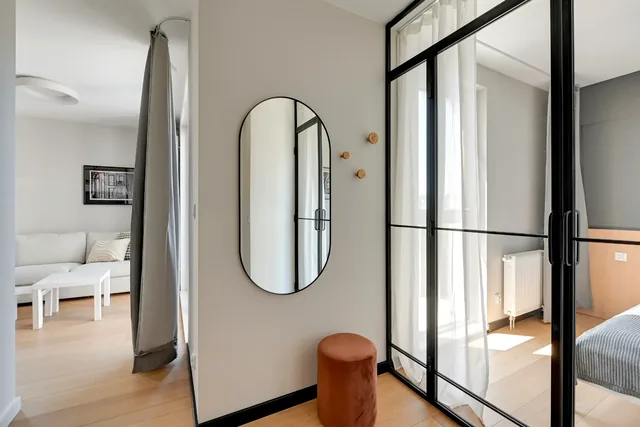
Glass keeps the areas connected, but choosing the right kind matters
A transparent divider marks a boundary but still leaves the bed visible from the living area. It can therefore organise the interior without meeting the expectations of someone who wants to be out of another guest's sight. If that is the goal, consider adding a curtain or choosing a different type of glass rather than treating glazing alone as a guarantee of privacy.
Frosted and patterned glass can let diffused light through while limiting visibility. However, manufacturers' specifications show varying degrees of visual screening, so not all such glass has the same effect.1 Before ordering, view a sample in conditions similar to those in the apartment, including with the lights on on both sides.
A view of the Aura 40 project illustrates a division created with glazing. It is a point of reference for discussing interior design, not proof that a similar layout will work in every studio. Leave the choice of glass and mounting method to a designer or contractor.
A curtain offers flexibility; a solid divider calls for caution
A curtain can be drawn open during the day and closed in the evening. This is worth comparing when a screen is only needed sometimes. However, allow space for the gathered fabric and check that, when opened, it does not drag on the floor or block access to the bed. How it is removed and washed should be just as clear as how it is used.
Consider a solid, opaque division more cautiously, especially if the studio gets daylight from only one side. Before choosing this option, check the view and brightness on both sides of the proposed boundary. Do not create a dark corner solely to hide the bed. A specialist should assess how a permanent division may affect ventilation, heating, and other installations; this is not a decision to make based on an inspirational photo.
Clear passage matters more than the effect in a rendering
In a studio, the same space serves as an entrance, a place to relax, a spot for luggage, and an area for getting ready to go out. A new divider should not force people to walk around the bed or conflict with an open wardrobe. Check doors in use, not just as lines on a floor plan. Also consider the space needed by someone carrying a suitcase or fresh bed linen.
Before ordering a divider, mark its outline on the floor and do a quick test:
- walk from the entrance to the bathroom and the window with a suitcase;
- open the wardrobe and check access to both sides of the bed;
- see where the vacuum cleaner and bag of clean bed linen will go.
If you have to move something every time you do one of these tasks, consider changing the divider's layout. Interior design should take these everyday situations into account rather than stopping at an eye-catching division in a photo.
Two hypothetical studios, two different decisions
Imagine a studio with the bed in an alcove, where the entrance reveals mostly its side. The owner wants to make the view from the door more orderly. A short screen may be enough; enclosing the entire alcove would be an additional intervention without a clear need.
In a second hypothetical apartment, the window is beside the bed and the table is at the back of the apartment. An opaque divider would block part of the view towards the window. Here, it is worth comparing glazing with a curtain that can be drawn open, or doing away with a permanent divider. The choice depends on the layout of the particular interior, not on the belief that every studio must have a separate sleeping area.
The listing should also make the limitations clear
After changing the layout, photos should show the divider from both the bed and living-area sides. If the screen is movable, consider showing it both open and closed. Guests should understand how to use the space, rather than having to guess the layout from a single attractive shot.
If you are still offering a studio, describe it as having a designated sleeping area and name the type of screen. Do not present it as a separate bedroom just because the bed has disappeared from the main photo. You can find more guidance in our guide to preparing an accurate description of an apartment.
Discuss the division before commissioning the work
The best divider solves a specific problem rather than creating another one. Before deciding, prepare a floor plan, photos from the entrance and window, and information about what you want to improve. This will help you discuss guests' actual comfort and the convenience of managing the apartment, rather than just the style.
If you are considering entrusting your rental management to us, talk to GrandRent about your apartment. The initial conversation about entrusting the apartment to us for management is free of charge. Any design work and other services have a separate scope and fee, agreed individually. Start with the specific studio and its users' needs before ordering a divider.
Technical sources
The article explains the rules and questions you should ask the operator. Rental results and cooperation terms require analysis of the specific apartment.