
Guests are unfamiliar with your apartment. They use a few photos and a description to work out whether they will have a comfortable stay. The owner, on the other hand, knows details that are easy to take for granted: a sofa instead of a second bed, stairs before the lift or parking that requires a separate reservation. An accurate listing brings these two perspectives together. It does not need to leave limitations unmentioned to make a stay appealing.
Sleeping arrangements: guest capacity does not explain the layout
The phrase “apartment for four people” indicates capacity but does not explain where those people will sleep. The description should distinguish the number of sleeping places from the number of bedrooms and state the type and location of each sleeping place. A bedroom with a door, an open alcove and a mezzanine offer different levels of privacy.
Illustrative example: the property has one bedroom with a double bed and a sofa bed in the living room. Instead of the vague phrase “two comfortable sleeping areas”, it is better to state clearly: “Two people sleep in a separate bedroom and two on a sofa bed in the living room”. If opening the sofa bed makes the passage to the kitchenette narrow, this detail also helps guests picture how they will use the space day to day.
Give the dimensions of sleeping surfaces only after checking them, not based on how the furniture looks. Do not suggest that a bed can be separated if its construction does not allow it. This is a description of an existing property, not a shopping list or a renovation plan.
Stairs and lift: describe the full route to the apartment
Simply mentioning a lift may leave an important question unanswered. Can it be reached without using stairs? Does it stop on the apartment's level? Are there stairs inside the property that guests need to climb to reach the bedroom? For someone with reduced mobility or a family with a pushchair, this information may determine their choice.
Describe the facts: the floor, whether there is a lift and any parts of the route that involve steps. If passage widths or other conditions have not been confirmed, do not replace missing information with a claim of “full accessibility”. The owner should also share information about any known limitation that affects the route to the apartment.
Details can be explained before the stay as part of the agreed guest services, but any significant limitation should already be clear when guests are deciding whether to book.
Parking: distinguish an allocated space from parking possibilities
“Parking by the property” may mean a private space, a public car park or a street where a space is sometimes available. These are not equivalent amenities. The description should explain whether a space is allocated to the apartment, whether it needs confirmation, whether there is an additional charge and where it is located.
Illustrative example: public parking spaces are available near the building, but the owner does not have a space for the guest. An honest description explains that parking is possible nearby and that an available space is not guaranteed. It does not present this as parking included in the price of the stay.
If the property has a garage space, it is worth confirming any entry restrictions, particularly the maximum vehicle height. Do not enter dimensions from memory. A guest travelling with a roof rack needs specific information, not an assurance that “every car will fit”.
Amenities and photos must not imply more than the description states
A pool, sauna or gym in the building may not be available to guests of a particular apartment. Before including them in the listing, you need to confirm guests' right to use them, any fees, whether a reservation is required and any restrictions on hours or seasonal availability. A photo of such a space without an explanation of the conditions may suggest that its use is part of the stay.
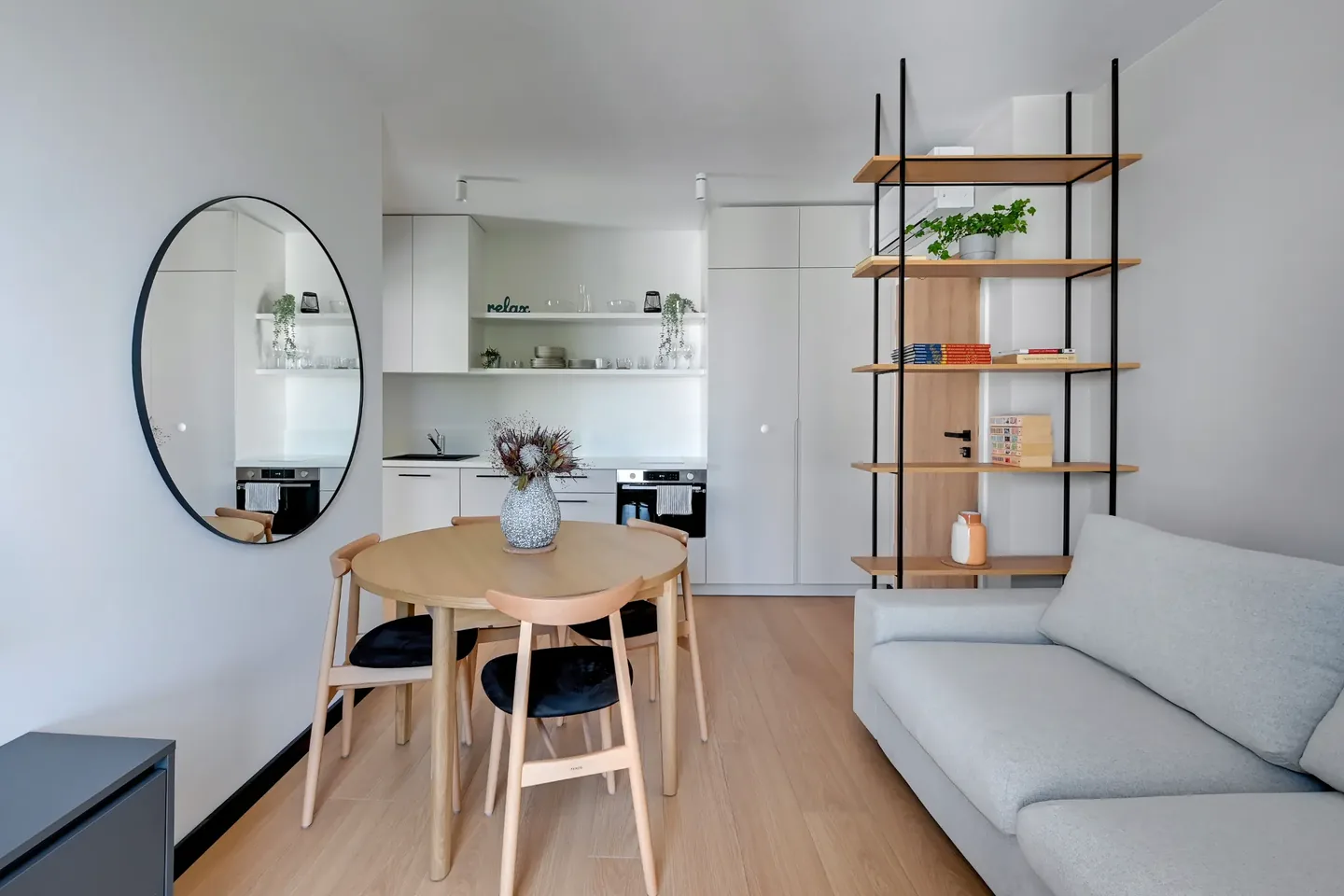
Interior photography works in a similar way. A wide shot of the living room should show the actual furniture layout and the passage to the sleeping area, rather than make the room look larger. Photos and text should complement each other: if the sleeping area is open, the description should not call it a separate room.
The fact that GrandRent manages a particular apartment does not mean it manages the entire building. Nor does it allow access to all of the building's amenities to be promised.
One verified version of the information
Before preparing the listing, gather a description of the property's layout, access conditions, parking and the rules for using amenities. Separate verified information from details that still need confirmation. If something is unknown, it is better to clarify it than to add an appealing assurance.
GrandRent prepares the listing using confirmed information, within the agreed scope of rental management. If the property or building rules change, it is worth reviewing the description and photos. Collaboration terms should define the scope of activities and how such arrangements are communicated.
Before handing your apartment over for management, it is worth gathering the facts about the property. Tell GrandRent about your apartment and the conditions for staying there if it is in Gdańsk, Sopot or Gdynia. During a free first conversation about rental management, you can identify which information has already been checked and which details need confirmation before the listing is prepared.
Owners' questions
Should every minor drawback be described?
The priority is to describe conditions that affect the decision to stay and the use of the property. This is not about creating a catalogue of faults, but about clearly explaining sleeping arrangements, access and limitations on amenities.
Is a photo showing the stairs enough?
Guests should not be left to guess. A photo may not show the full route to the apartment. A short sentence about the stairs and lift explains more than the image alone.
What should you do if access to an amenity has not been confirmed?
Do not present it as part of the listing. First check the conditions of use for guests of the specific property, and only then update the description.
The article explains the rules and questions you should ask the operator. Rental results and cooperation terms require analysis of the specific apartment.