
An apartment owner may have carefully prepared photos and a description, yet still find themselves answering the same questions over and over: where to park, whether the sofa can be used as a bed, and whether late-evening arrival is possible. Another message does not necessarily mean the guest has not read the listing. It may indicate that the answer is incomplete, hard to find, or leaves room for guesswork.
How can you use guests’ recurring questions to improve an apartment listing? Group them according to the decision the guest is trying to make, verify the facts, and put the answers in the right places: the description, amenities, photos, or booking terms. The aim is not to add everything to a single paragraph, but to address specific uncertainties before the guest books a stay.
Group questions by the decision, not by individual words
It is worth keeping a simple note of the topics guests ask about. There is no need to copy entire conversations or guest details. Simply record what the question concerned, where the answer currently appears, and what needs to be checked. Separate questions asked before booking from those about using appliances during the stay. These are two different communication tasks.
In a hypothetical property, questions about bed width, a sofa bed, and a separate bedroom may all relate to the same decision: whether everyone will have a suitable place to sleep. Instead of adding three unrelated sentences, it is better to prepare one clear description of the sleeping arrangements. Address first the uncertainties that make it difficult to assess whether the property suits the trip. A one-off question about an unusual need does not have to prompt an immediate overhaul of the entire listing.
Verify the answer first, then update the description
A recurring question shows that information is needed, but it does not provide the answer. Before changing the listing, the owner should verify the details and terms. Is the parking space actually included with the property? Does using it require prior arrangement? Does the sofa convert into a bed? A photo alone cannot settle these questions.
Airbnb requires listings to accurately present, among other things, the property layout, sleeping arrangements, and available amenities, and to disclose any restrictions on their use 2. This is a rule for a specific platform, but it is also worth relying on verified facts when organizing your own listing.
If something has not yet been confirmed, do not replace it with a convenient assurance. Check it with the person responsible for managing the property. For broader guidance on writing a description, see the guide on how to prepare an accurate description; here, the starting point is the specific questions that reveal what is missing.
Put the answer where the guest will look for it
Not every detail belongs in the main description. Airbnb’s official guide recommends briefly presenting the most important features without repeating the full list of amenities, and completing the other sections of the listing 1. The available fields differ from one channel to another, so organize the content by purpose rather than by tab name.
When updating a listing, this simple breakdown can help:
- Room layout and sleeping arrangements: describe the space and complete the relevant listing fields.
- Whether amenities are available: list them and explain any restrictions.
- Appearance and placement of features: use a photo with a factual caption.
- Arrival and usage terms: set out the rules, distinguishing between arrangements that are fixed and those that need confirmation.
If an important answer is already there, check that it is not buried beneath a long introduction. Sometimes it is enough to move it closer to the information it relates to. A good listing presentation is not about making the text longer, but about making it easier to assess the apartment.
Photos explain the space, but do not replace terms and conditions
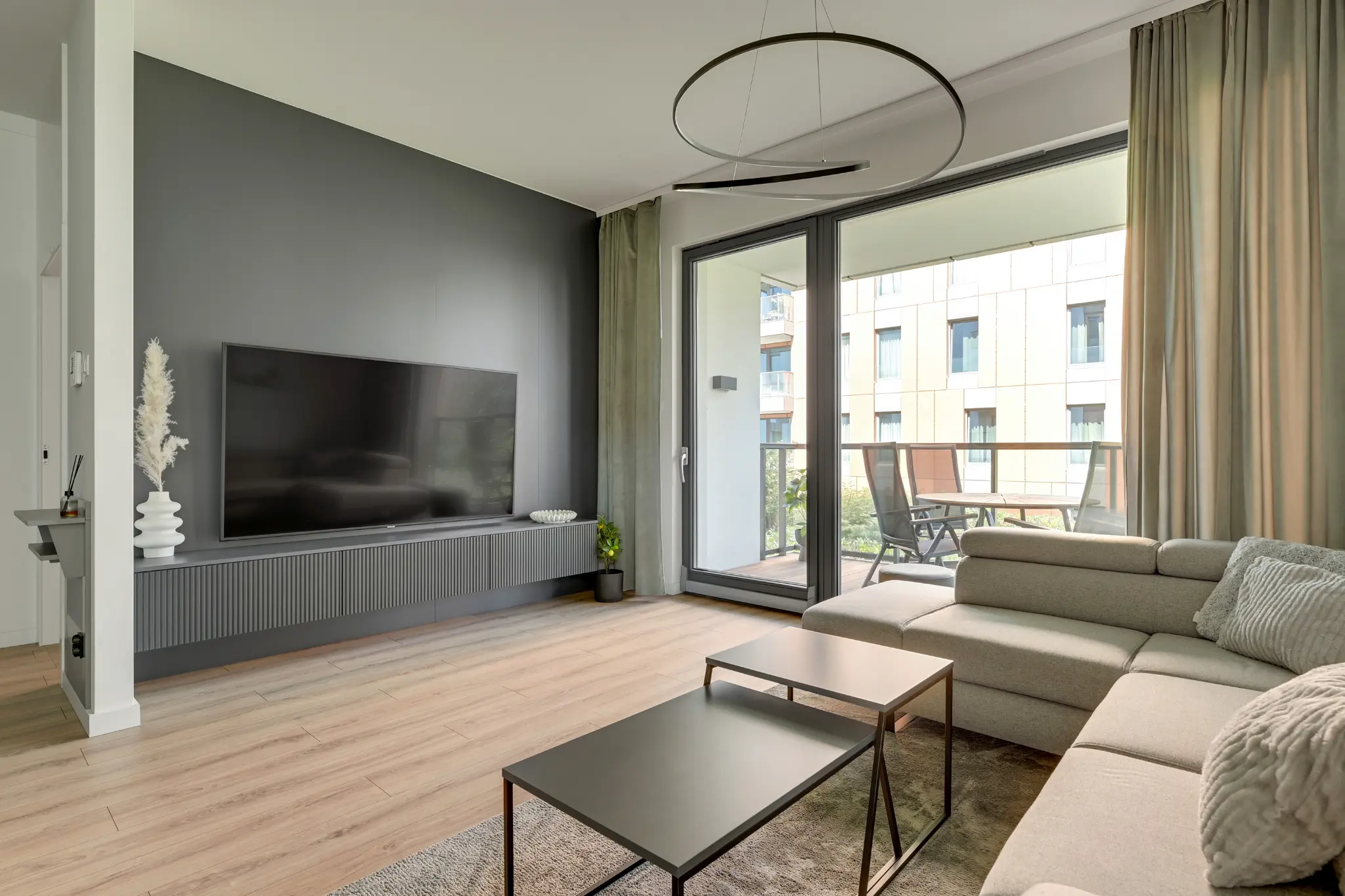
If questions concern the balcony’s location, whether the bedroom is separate, or where to work, check the photo gallery. Does it show how the rooms connect, or only attractive details? A shot showing the living room and the way out to the balcony may say more about the layout than another close-up of the decor.
In a hypothetical apartment, guests ask whether the table is comfortable for working at. A photo can show the tabletop and a chair, but it cannot confirm the quality of the internet connection. If you want to provide that information, it must be verified separately. Similarly, a photo of a sofa is not a promise of an additional sleeping place. Choose the shot to answer the question, and keep the caption factual. Do not attribute functions to a photo that it does not show and that have not been confirmed.
Distinguish a permanent feature from a request that needs to be agreed
Questions about early arrival, late departure, or extra amenities often concern possibilities that depend on the specific booking. Do not turn a frequently received request into a standing promise. The listing should explain what is standard and what guests can ask about before booking.
Suppose early access to the property is sometimes possible, but depends on when the apartment is ready. In this hypothetical case, you should not say that early check-in is available unconditionally. A clear qualification allows guests to check whether it is possible before booking a stay. If these requests keep coming up, the owner and operator should agree on a consistent response and any conditions that apply. There is no need to publish key collection instructions or access details.
Check whether the update addresses the right problem
After making a change, note which question it was intended to clarify. When reviewing messages again, look not only at how many similar topics come up, but also at what they say. “Is there parking?” is different from “Will a car with a roof box fit?” The second may need individual confirmation rather than a further expansion of the description.
If the underlying question keeps coming up, check whether the information is easy to find and consistent across channels. Perhaps a photo suggests something different from the text, or only one version of the listing has been updated. Do not treat every subsequent message as a mistake. The goal is to provide clear information and address unusual needs, not to eliminate all contact with guests.
Agree with the operator on who updates the information
The owner knows the property, while guest services hears the questions people ask before booking. It is worth bringing these perspectives together: decide who collects the topics, who verifies the answers, and who updates the listing. That way, a recurring message can lead to a specific update rather than another one-off explanation.
If you are considering entrusting GrandRent with managing your apartment in Trójmiasto, let’s talk about the specific property and the questions its listing raises. The initial conversation about entrusting us with rental management is free. We agree on the scope of cooperation and service terms individually—let’s start by checking what guests should know before booking your apartment.
Technical sources
The article explains the rules and questions you should ask the operator. Rental results and cooperation terms require analysis of the specific apartment.