
During a viewing, the owner sees a bright living room and large windows. It is easy to assume that the question of light has been settled. But the apartment needs to serve guests for more than the quarter of an hour spent showing it. It also matters what the morning is like at the table and the afternoon on the sofa.
How can you assess natural light in an apartment before buying? Arrange at least two viewings at different times, check which way the windows face, and assess the brightness where guests will actually sit. Do not judge the entire apartment solely from beside the window. Also note the weather and the position of the window coverings so you know what you are comparing.
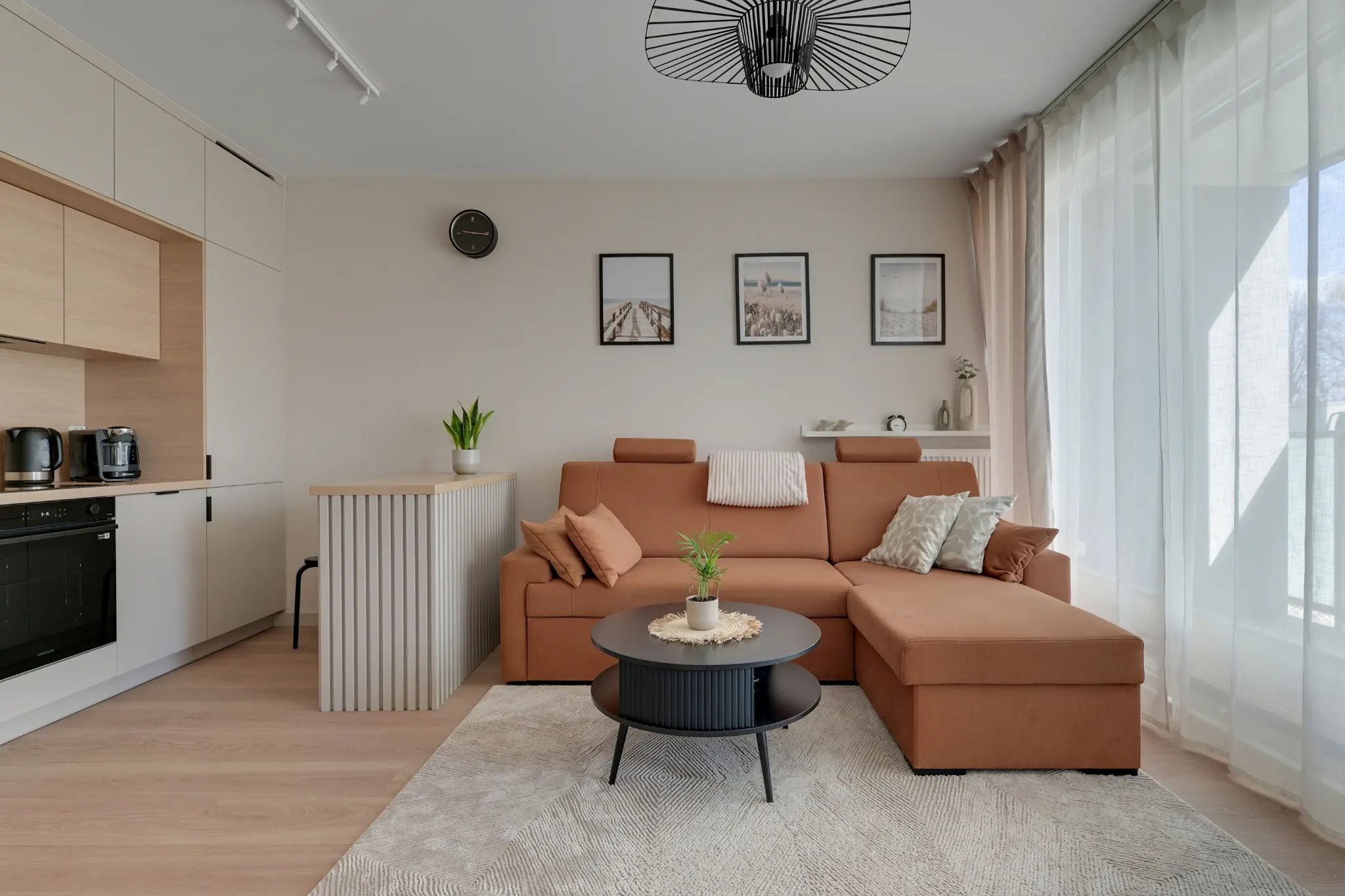
Schedule a second viewing before making a decision
The first visit helps identify areas that need checking. The second should take place at a different time of day, not just an hour later. For east-facing windows, ask to visit in the morning; for west-facing ones, also visit in the late afternoon. However, do not choose a time without considering the season: the viewings should still take place in daylight.
Keep the conditions similar during both visits. With the seller’s permission, turn off the lights and draw back the curtains, then also check the apartment with the coverings used for privacy in place. If it is sunny one day and cloudy the next, do not treat the difference as the result of the time of day alone. Natural daylight also includes diffuse light from the sky, not just direct sunlight.2
A brief note from each visit should include:
- the time and weather;
- the direction the windows face and any visible obstructions;
- observations at the table, on the sofa and at the planned workspace;
- the position of curtains, blinds and furniture.
This is one specific part of a broader assessment of the property. Other matters are covered by a pre-purchase inspection—there is no need to resolve them all while assessing the light.
Orientation is a clue, not a verdict on the apartment
Ask for a floor plan showing north and determine the orientation of each room separately. The living room and bedroom do not have to face the same direction. The description “south-facing” also does not tell you whether the window looks out onto open space or a neighbouring façade.
Do not use a simple ranking: south is good, north is bad. The U.S. Department of Energy notes that north-facing windows can provide natural light with limited glare, while with east- and west-facing windows it is worth paying attention to excessive sunlight and glare.1 This is a point to consider during your viewing, not a ready-made assessment of a particular apartment in Trójmiasto.
Instead of asking only “is it sunny?”, ask “does the light suit the room’s purpose?”. For someone working at a computer, direct sunlight on the screen may be a problem, even if it looks impressive during the viewing. Also check the bedroom from the perspective of the bed, not just from the doorway.
Look at what is outside the window and further inside the room
Look at neighbouring buildings, the balcony above the window and any trees. Note which parts of the view are blocked and whether you can see any shade during the visit. Do not assume that one view shows the conditions throughout the year. You can ask the seller about seasonal differences, but treat the answer as information to verify, not as a measurement.
Large windows alone are not enough to assess the whole interior. The WBDG guide lists factors affecting daylight, including the size and placement of windows, the type of glass, room layout and surface finishes.2 So walk from the window to the furthest usable area of the room.
If the property is in a new development, bring a floor plan of the proposed layout. An empty room does not yet show where tall built-in units will go or whether the table will remain in the spot you are assessing. If your purchase depends on unresolved questions about the light, consider an analysis by a designer rather than guessing from visualisations.
Sit where a guest will eat and work
At the table, check whether you can comfortably read an ordinary sheet of paper or a menu without turning on the lights. On the sofa, assess both the brightness and whether you have to turn your gaze away from the window. In the kitchenette, look at the worktop from the position of the person preparing a meal. These are practical assessments of how the light feels, not tests of compliance with standards.
If you plan to have a workspace, sit with an open laptop in the intended spot. Check whether the window is reflected on the screen and whether you need to cover the entire window to work comfortably. The WBDG draws attention to glare and reflections on shiny surfaces, which can make it difficult to see.2
Take photos from the same spots during both visits, but use them only to support your notes. Do not substitute a comparison of two photographs for your own observations. Write down a specific conclusion—for example, “comfortable at the table, but a different arrangement is needed for the planned desk”—rather than a general one such as “bright apartment”.
Separate layout changes from the property’s limitations
Suppose, hypothetically, that the living room is pleasant in the morning but the afternoon sun is bothersome at the desk. If you can move the desk without blocking a walkway, it is worth discussing the issue when designing the interior. This is not an automatic reason to abandon the purchase.
The situation is different if the only place for the table is deep inside the room and, during both viewings, it seems too dark for the intended use. Do not put an undefined “improvement in brightness” in your plan. Check whether the layout can actually be changed and factor in the work required before deciding.
A discussion of natural light should not turn into choosing lamps. At this stage, you are assessing a feature of the property and the options for arranging its functions. Artificial lighting can be planned later, without pretending that it removes every limitation discovered during the viewing.
Make your decision based on how the apartment will be used, not on a single impression
After the visits, summarise which areas suit your rental plan, what needs changing and what you still do not know. If you are comparing two apartments, carry out the same checks in both. A bright living room should not distract from a problem at the table or replace an assessment of the investment’s other features. A broader comparison may include an individually agreed investment analysis.
Have a specific property in mind? Talk to GrandRent about its layout and your planned rental approach in Trójmiasto. Bring the floor plan, photos and notes from the viewings. The initial conversation about entrusting the apartment to us for rental management is free of charge; a separate investment analysis and other services are paid for, with the scope agreed individually.
Technical sources
The article explains the rules and questions you should ask the operator. Rental results and cooperation terms require analysis of the specific apartment.