
The apartment is clean, the beds are made, and there is one pack of bin bags left in the kitchen cupboard. The owner doesn’t know, because no one reported buying them after the last stay. The problem need not be a lack of money or carelessness. Often, what is missing is a simple agreement on when stock is too low and who should act.
How should you organise replenishment of small supplies in an apartment? Agree on a product list, a minimum stock level that triggers a report, and who is responsible for checking, purchasing and confirming delivery. It is worth combining the check with preparing the apartment after a stay, but not automatically treating it as an obligation to buy supplies. This division of responsibilities should follow the agreed scope of service.
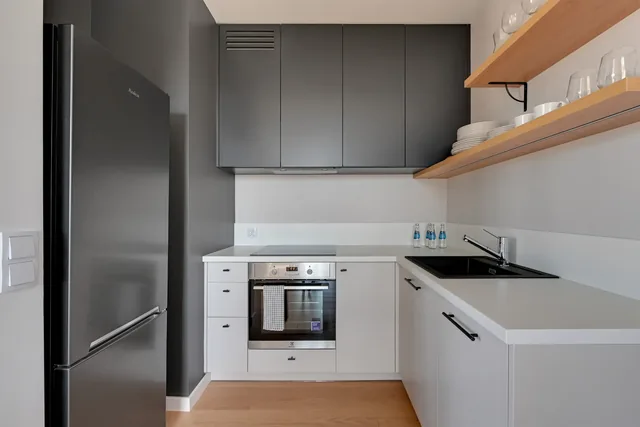
Illustrative photo — kitchen in the Aura 40 apartment.
First, decide what you actually replenish
Not every item in a cupboard is a supply that needs to be replaced after a stay. Separate products provided for guests from materials used by the cleaning team and items belonging to the owner. That way, the disappearance of a personal pack of coffee won’t trigger an accidental purchase, and cleaning liquid won’t be mistaken for an amenity for guests.
To start with, a short list tailored to the apartment is enough. It might include toilet paper, soap, bin bags and dishwasher tablets, if these are part of the agreed amenities. Also note the bag size or pack capacity. “Buy more bags” is less useful than specifying a product that fits the particular bin.
This is not a list of all cleaning duties. A separate cleaning standard describes how the interior should be prepared. The point here is to make sure that, once the check is complete, everyone knows what is missing and what needs to happen next.
A minimum is the point for reporting, not an empty shelf
The minimum stock level should allow time to buy and deliver the product. If a report is only made after the last item has been used, the person replenishing the supplies is already under pressure because of the next arrival. So the minimum does not mean “this is what we leave for guests”; it means “when stock reaches this level, replenishment begins.”
Imagine a hypothetical apartment where the minimum is set at one unopened pack of bin bags in reserve. When the person checking the apartment opens the last reserve pack, they report that more need to be bought. They don’t wait until the last bag is gone. You can separately set a target stock level—the quantity the supply will be replenished to after delivery.
There is no single number that works for every apartment. Set the threshold based on the number of guests, the agreed way of providing products, and the time needed to replenish them. If deliveries are less frequent, the reserve needs to account for that interval. After a few checks, it is worth reviewing whether the minimum leads to constant urgent requests or an overcrowded cupboard.
Give supplies one designated place and clear labels
Checking stock will be difficult if some packs are under the sink, some in a wardrobe and the rest in a shopping bag. Designate one agreed place for reserve supplies and keep them separate from products ready for immediate use. The person checking the apartment should know where to look without searching every cupboard.
You can label the shelf or stock record with the product name, minimum level and target level. Also note the specific product variant and the manufacturer’s instructions. Instructions for use vary by product, as the official descriptions of different Finish dishwasher tablets illustrate.1 Buying a substitute should therefore not mean leaving unlabelled tablets in a random container.
Agree whether the reserve is available to guests or only to the people servicing the apartment. This is an organisational decision, not a way of hiding shortages. When replenishing, use packs delivered earlier first, rather than continually adding new ones at the front.
Separate noticing a shortage from responsibility for buying
The person preparing the apartment can check supplies without being authorised to make purchases. The owner can buy them personally, ask the person servicing the apartment to do so, or agree on another delivery arrangement. The important thing is that no step is left under the vague assumption that “someone will take care of it.”
Record four brief answers in your agreement:
- Who checks stock, and at what point while preparing the apartment?
- Who is notified when stock reaches the minimum, and through which channel?
- Who orders or buys the products and delivers them?
- Who confirms that the supplies have been placed in the designated location?
If checking is to be part of technical maintenance and cleaning, it needs to be agreed as part of the wider scope. Commissioning cleaning alone does not clarify responsibility for purchases, approving substitutes or delivery. This guide sets out how products are handled, not how the budget is calculated.
Close a shortage report only after delivery
A useful shortage report states the apartment, the product, the current stock level and when replenishment is needed. A hypothetical report could read: “Apartment A: the last pack of bin bags has been opened; minimum reached. Please replenish before the apartment is prepared for the next stay.” This gives someone a clear basis for action, unlike a vague message such as “we’re running out of things in the kitchen.”
You don’t need a complex system. An agreed list or a single communication channel is enough, as long as it is possible to distinguish a report from an order and a confirmed delivery. “Bought” does not yet mean “delivered to the apartment.” The shortage remains unresolved until the product reaches the right shelf.
It is also worth arranging cover for when the person responsible for buying is unavailable. If the supplies cannot be replenished before the next arrival, the report should go to a designated decision-maker instead of getting lost among messages. The next step depends on the agreed standard of amenities and the products available.
Agree on a process for your apartment before handing over its management
When starting to work together, show where the reserve is kept, record the initial stock and identify products that must not be replaced without agreement. If the owner adds supplies during a visit, they should tell the person carrying out the checks. Otherwise, an unnecessary duplicate order may be placed.
At GrandRent, the scope of service, costs and authorisations are agreed individually. Before entrusting us with your apartment, review the terms of cooperation and let’s discuss the specific property: its amenities, where reserve supplies will be kept and how tasks will be divided. The initial conversation about entrusting us with rental management is free of charge. It is a good opportunity to agree not only on who will notice a shortage, but also on who will see replenishment through to completion.
Technical sources
The article explains the rules and questions you should ask the operator. Rental results and cooperation terms require analysis of the specific apartment.