
The owner looks at new photos of the apartment: the living room looks spacious, the bathroom elegant, and the bed inviting. But is the low sofa comfortable to sit on? Is it easy to find the light switch in the evening? A photo usually does not answer questions like these.
How can you assess an apartment’s comfort for older guests? The best way is to go through ordinary activities: putting down luggage, sitting down, standing up, getting to the bathroom, and using the kitchen. Check how easy the interior is to navigate, along with the seating and pathways in the apartment’s actual layout. Age alone, however, does not tell you everything about an individual’s needs. Small adjustments may make a stay easier, but they do not mean the property is fully accessible.
Check how easy the interior is to navigate after dark, too
Start with the lighting, not the decor. Go into the bedroom in the evening and check whether you can switch on the bedside lamp without crossing a dark room. Sit at the table: is the light bright enough to read instructions, and does any exposed light source shine directly into your eyes? Oklahoma State University’s material recommends appropriate lighting placement that avoids glare, as well as contrast to help people with reduced vision distinguish features of the interior.2
In practice, check whether switches, handles, and furniture edges are easy to see. You do not need to change the entire decor straight away. First, check whether the available lamp actually lights the reading area and whether the user instructions are printed clearly. Decorative accent lighting is no substitute for the light needed for everyday activities. Check with the curtains drawn so that daylight does not hide a problem.
Sitting down and standing up: a piece of furniture’s appearance is not enough
Sit on every type of seat, not just the most presentable armchair. Check whether the chair is stable, whether the sofa cushion sinks too much, and whether there is room to position your feet when standing up. The NIA notes that sofas and chairs should be at a height that makes sitting down and standing up easy.1 So it makes little sense to judge comfort solely by how soft the upholstery is.
Suppose that, in a hypothetical apartment, all the seating is low, even though the living room is large. Before replacing the entire furniture set, consider adding a stable armchair with armrests and check where it would fit. It will not suit everyone, but it will offer a choice. Assess the bed in the same way: sit on the edge, check access to both sides, and see if there is somewhere to put glasses. We discuss a broader review of furniture in our guide to furnishing mistakes.
Assess pathways in an apartment set up for a stay
An empty property and an apartment prepared for several people have two different layouts. Make up the sofa bed, pull out a dining chair, open the bathroom door, and put a suitcase in the designated spot. Only then walk from the bed to the toilet and from the entrance to the kitchen. Pay attention to places where you have to squeeze through or go around low tables.
The NIA recommends removing obstacles from walking routes, keeping cables out of the way, and avoiding small loose rugs.1 For owners, this is a prompt to take another look at accessories: a decorative pouf should not block the only convenient pathway. Measure narrower spots if a guest asking questions needs specific information. Moving a table, by itself, does not confirm that someone can get around in a wheelchair or with a walker.
Bathroom: show how it is used, not just its standard
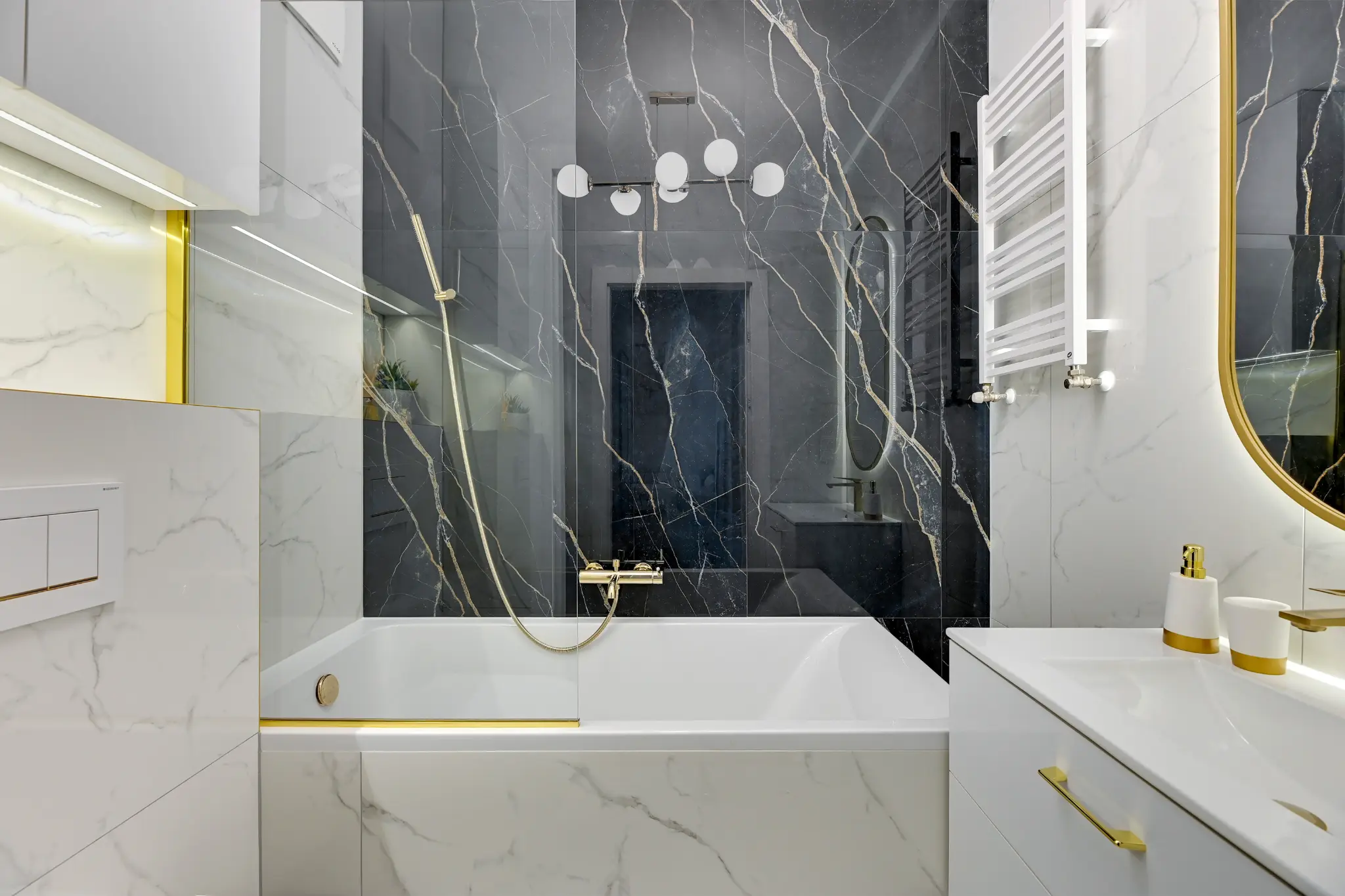
A bathtub with a glass screen may look good, but guests need to know that bathing requires stepping over its edge. A description such as “bathroom with a shower” should not obscure this difference if the shower is over the bathtub. It is worth showing the whole fixture rather than just the taps and decorative tiles.
Also check the space in front of the sink, access to a towel, and whether toiletries can be put down without bending to the floor. Do not treat a radiator, glass screen, or towel rail as a grab bar. If you are considering installing features to support a user, leave the selection and installation method to a specialist. Do not claim that a structure is safe based on its appearance or a self-performed test. The assigned photo is illustrative and does not assess the comfort of any specific bathroom.
Everyday tasks should not involve guesswork
Make tea as someone visiting the apartment for the first time would. Are the mugs within easy reach? Can you fill the kettle and put it back without moving other appliances? It is worth keeping the most frequently used dishes where guests do not have to search several cupboards or reach for the highest shelf.
Check the remote control and heating controls separately. A short set of instructions should explain the basic operation, not reproduce the manufacturer’s entire manual. You could ask someone unfamiliar with the apartment to turn on the TV without help. If they have to guess, improve the instructions. This checks how clear the controls are, not a guest’s age or abilities.
Make small fixes first, then plan bigger changes
The review should lead to decisions, not a vague note saying “senior-friendly.” Divide your findings into three short groups:
- to fix straight away: move a table, tidy away cables, make the instructions clearer;
- to get a quote for: different seating, changes to the lighting, professionally designed bathroom fittings;
- to describe accurately: a bathtub, a narrow passage when the sofa bed is open, or access to the bed from only one side.
Not every obstacle can be reasonably removed in an existing property. For an investor buying an apartment, checking the intended furniture layout before purchasing furnishings is more important than promising to make changes later. With a limited budget, prioritize improvements related to frequently performed activities rather than accessories that mainly serve to enhance photos.
Be specific instead of using the label “for seniors”
In the listing, state features guests can relate to their own needs: a bathtub rather than a walk-in shower, an armchair with armrests, or a bedside lamp. Avoid a blanket assurance that the apartment is suitable for all older people. Information about stairs and the lift is a separate assessment of the route to the property; our guide on how to prepare an accurate description explains how to present it.
The information gathered should be available to the people answering questions before booking. When discussing guest services, it is worth agreeing on how to share information about the limitations of a particular interior. If you are considering entrusting your apartment in Trójmiasto to GrandRent, let’s discuss its layout, furnishings, and any changes it may need. The initial conversation about entrusting the property to us for management is free; the scope of any further work and services is agreed individually.
Technical sources
The article explains the rules and questions you should ask the operator. Rental results and cooperation terms require analysis of the specific apartment.