
You’re viewing an apartment where everything seems ready to rent: a large sofa, an impressive kitchen, several sleeping spaces. Before deciding it’s a good purchase, however, check whether it would still be a comfortable home after the furnishings were changed. A future buyer may not want to continue renting it out.
How can you factor in a future sale when buying an apartment to rent out? Keep a functional layout, the option to arrange the furniture differently, and furnishings that can be replaced without major renovation. This is not about predicting the price or timing of a sale. It is about making sure that today’s rental plan does not become the only possible way to use the property.
Assess the apartment without assuming it will be rented out
During the viewing, picture someone living here every day. Where would they put away groceries, store clothes for different seasons, and sit down to work? Could they get to the bathroom when someone has unfolded the sofa bed? Questions like these help distinguish an attractive presentation from a comfortable place to live.
You don’t have to design the apartment for everyone. Choose one sensible alternative: a home for a couple or for someone who works from home part of the time. If it requires changing only a few pieces of furniture, the apartment offers more flexibility than an interior designed solely to provide sleeping space for a larger group. This is a selection criterion, not a promise of an easy sale. A future property transaction is a separate stage; for now, you are assessing which options you are buying along with the apartment.
Check two layouts on the floor plan, not just the current arrangement
Ask for a floor plan with measurements and check it during the viewing. Sketch a layout for renting and an alternative for everyday living. Mark doors, windows, and fixed features first, and only then add the bed, wardrobe, table, and workspace. Don’t assume a piece of furniture will fit just because it looks good in a rendering.
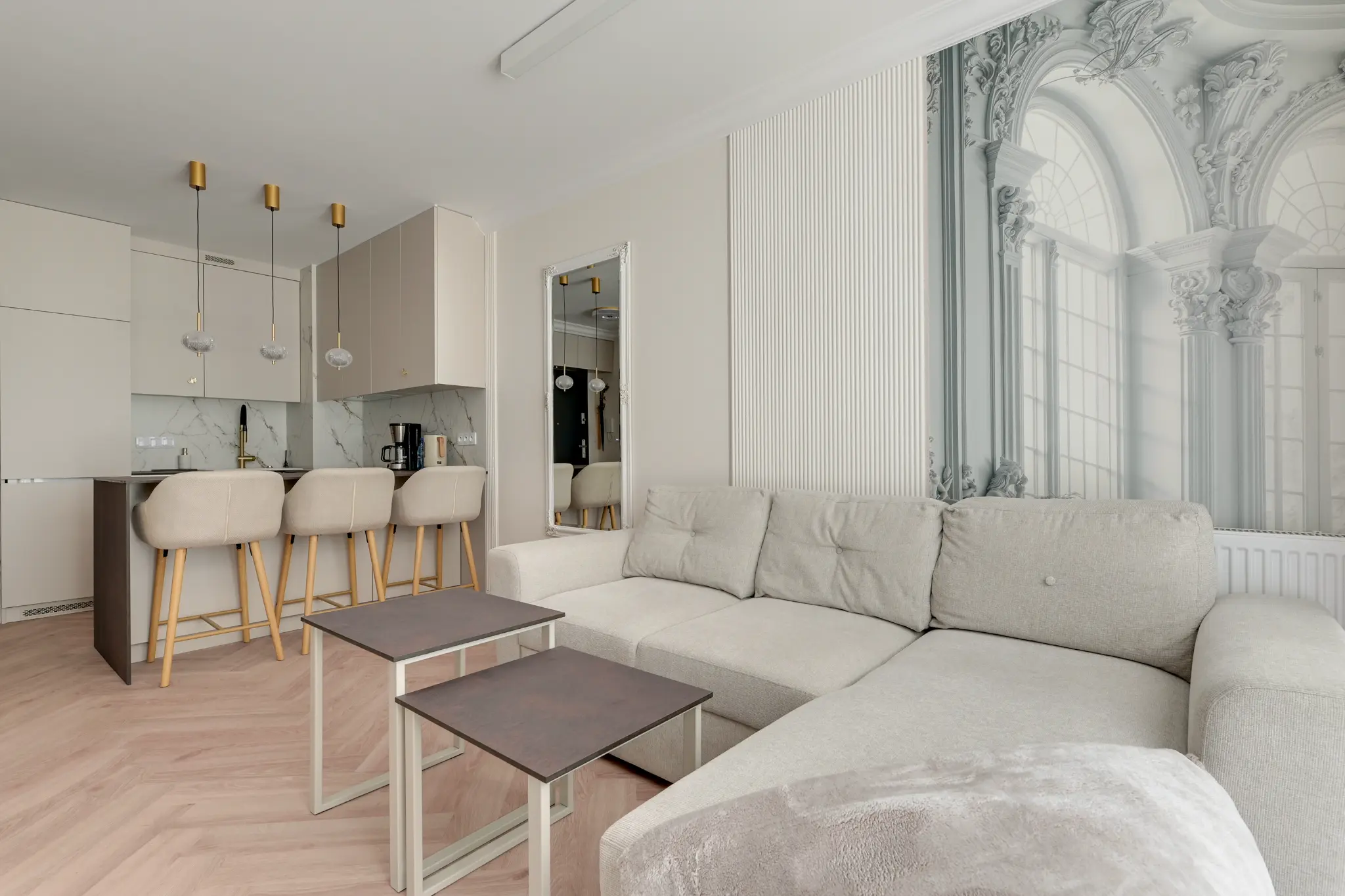
Hypothetically, a living room with a large corner sofa may be comfortable for guests, but after replacing it, it should be possible to fit a smaller sofa and a regular table. If a fixed bar takes up all the free space, an alternative layout becomes more difficult. Check the bedroom, too: is there room for a wardrobe without blocking the door, and does the bed leave any other options for arranging the room? Include this assessment as part of a broader pre-purchase inspection, rather than using it as a substitute for checking the documents and the property’s condition.
Don’t buy into the possibility of renovation on someone’s say-so
“This wall can be removed later” is not enough to base a purchase decision on. If an alternative layout requires work on the walls, ask an appropriate designer or structural engineer to assess it based on the documentation and an inspection. Distinguish between options that are already available and those whose feasibility still needs to be confirmed.
GUNB explicitly limits its interpretation concerning changes to partition walls to non-load-bearing walls, where there is no interference with an adjacent unit or a common area, and no division or merging of units.1 This is not general permission to transform an apartment however you wish. Also establish whether your proposed layout would require moving the kitchen or bathroom. A specialist should assess the options for modifying the installations and any required formalities for the specific property before you include such a layout in your investment plan.
Separate the permanent features from the replaceable furnishings
Before buying a furnished apartment, establish which items are freestanding, which are screwed in, and which are built-in. Reversibility does not mean removal will be cost-free. It means you can identify the work involved: moving a piece of furniture out, repairing fixings, repainting a wall, or carrying out much more extensive work.
A sofa, table, and decorations may suit the rental style. Assess raised platforms, unusual built-in beds, and large room-dividing structures more cautiously. Ask what will remain after they are removed and whether the finish underneath is complete. Don’t rule out made-to-measure furniture: a well-planned wardrobe can work in either layout. The problem is more likely to be a built-in feature that prevents the room from being used in another way. It is also worth keeping a record of the materials and furnishing models, so that replacing them later does not start with searching for everything all over again.
Extra sleeping space should not come at the expense of the room’s primary function
Preparing an apartment for rent does not have to mean adding the maximum number of beds. Assess the property with all the sleeping spaces in use, too. Check the passageways, access to wardrobes, and whether the kitchen can still be used. If unfolding the sofa requires moving the table out every day, note it as a compromise, not an invisible detail.
Hypothetically, an extra bed where the only spacious wardrobe should be may suit one idea for guest stays, but it limits the option of living there permanently. Your choice of furniture should therefore take into account whether storage can be restored. The arrangement must not cover ventilation grilles either; PSP reminds people to keep them unobstructed in its safety guidance.2 Do not treat building service features as surfaces that can be covered up however you like for a better visual effect.
Before deciding, write down the cost of changing how the apartment is used
You don’t need a forecast of the sale price to compare two apartments for flexibility. You need to know what would have to be changed in each one. Make a short list:
- What can stay when switching from renting it out to living there every day?
- What can be removed or replaced without renovation?
- What requires a cost estimate and technical confirmation?
- Which documents or answers are still missing?
If one layout depends on an unconfirmed wall removal, don’t compare it with another as if both options were equally available. Separate the cost of a known furnishing replacement from an idea that remains conditional. An apartment with less scope for changes may still suit your plans, but that should be a conscious choice, not something you discover after buying.
Discuss a specific property, not an abstract investment
It is worth bringing a floor plan, photos, and two possible layouts to a conversation with GrandRent. They will help you discuss preparing the apartment for rental management in Trójmiasto without designing the entire interior around a single scenario. If you need a broader assessment of the purchase, a separate investment analysis is a paid service with an individually agreed scope.
The initial conversation about entrusting your property to GrandRent for rental management is free. Tell us about the specific apartment and which options you want to preserve for the future. We will discuss your plans and the scope of any potential cooperation together—without assuming a future sale price.
Technical sources
The article explains the rules and questions you should ask the operator. Rental results and cooperation terms require analysis of the specific apartment.